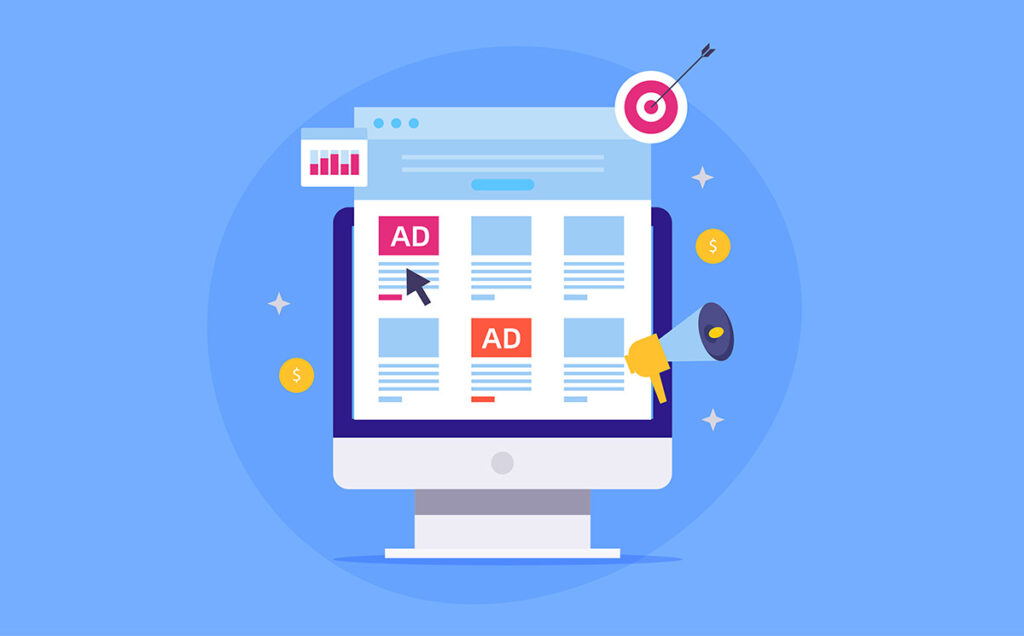
Native advertising is a form of paid content that seamlessly matches the style and tone of the platform it appears on, making it feel like part of the editorial experience. It offers higher engagement, improved brand trust, and a less disruptive user experience compared to traditional ads.
Keep reading to discover the best native ads and the secrets behind their success!
In This Article:
What Is Native Advertising?
Unlike traditional banner or pop-up ads, native ads are designed to blend seamlessly with the surrounding content, making them feel more like editorial content than intrusive promotions. This integration allows native ads to inform, entertain, or inspire audiences while subtly promoting a brand.
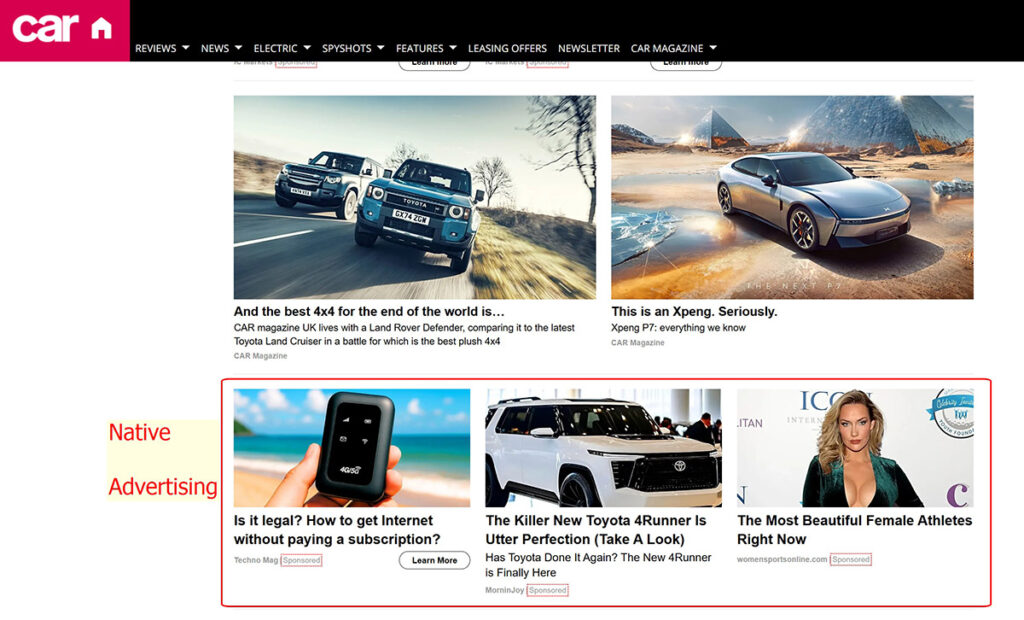
Here are the benefits of native advertising campaigns:
- Higher engagement rates: Native ads often achieve significantly higher interaction and click-through rates compared to traditional display ads. Because they match the content style of the host platform, users are more likely to view and engage with them.
- Improved brand trust and perception: When done well, native advertising builds credibility by providing value through storytelling or educational content. This soft-sell approach enhances brand image and can foster long-term trust with consumers.
- Enhanced user experience: Native ads maintain the flow of content, offering a non-disruptive advertising alternative. This ensures users remain immersed in their experience without being pulled away by jarring ad formats.
- Content flexibility across platforms: From in-feed social media posts to interactive videos, native advertising supports various formats and can be tailored for platforms like Instagram, TikTok, Spotify, or digital newspapers, increasing reach and adaptability.
- Better targeting capabilities: Many native ad platforms allow for granular targeting based on behavior, demographics, or context. This precision increases the likelihood of reaching audiences at the right time with relevant content.
- Increased brand recall: Because native ads align with user interests and appear in editorial-style formats, they are more memorable. Studies have shown higher brand recall for native content than for traditional advertising.
10 Examples Of Native Advertising
American City Business Journals and Platinum Bank
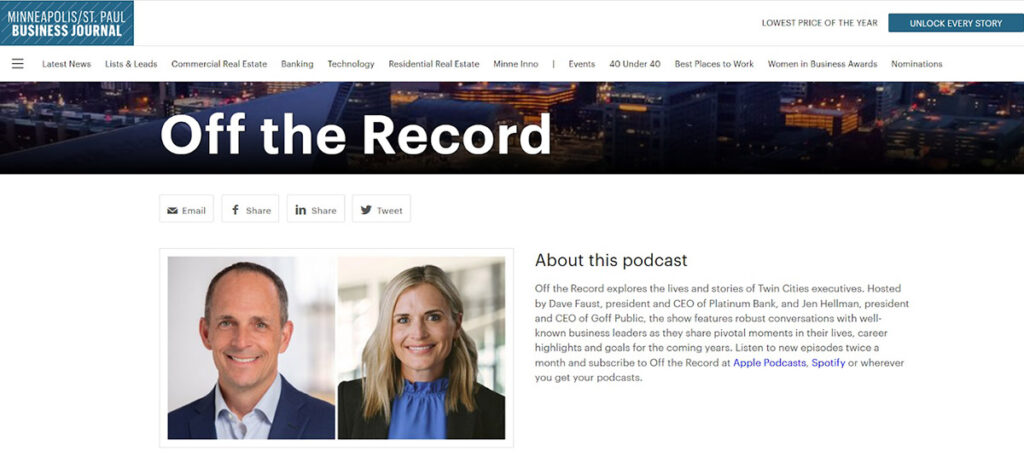
This collaboration between the Minneapolis/St. Paul Business Journal and Platinum Bank showcases how podcasting can be an effective native advertising tool. Their co-branded series, Off the Record, features intimate, in-depth conversations with local business leaders, hosted by Kathy Robideau, the Journal’s publisher, and Dave Faust, CEO of Platinum Bank.
The podcast doesn’t overtly promote Platinum Bank’s services but instead positions the bank as a credible partner embedded within the regional business ecosystem. This soft-sell approach fosters authenticity while still achieving core business goals: brand awareness, client acquisition, and relationship building.
The format also generated evergreen content that Platinum Bank could repurpose across channels. By leveraging the Business Journal’s editorial tone and audience trust, the podcast felt more like premium content than an ad, embodying native advertising’s value of seamless integration.
“Hennessy Fuels Our Chase for the Wild Rabbit … But What Does It All Mean?” by Vanity Fair
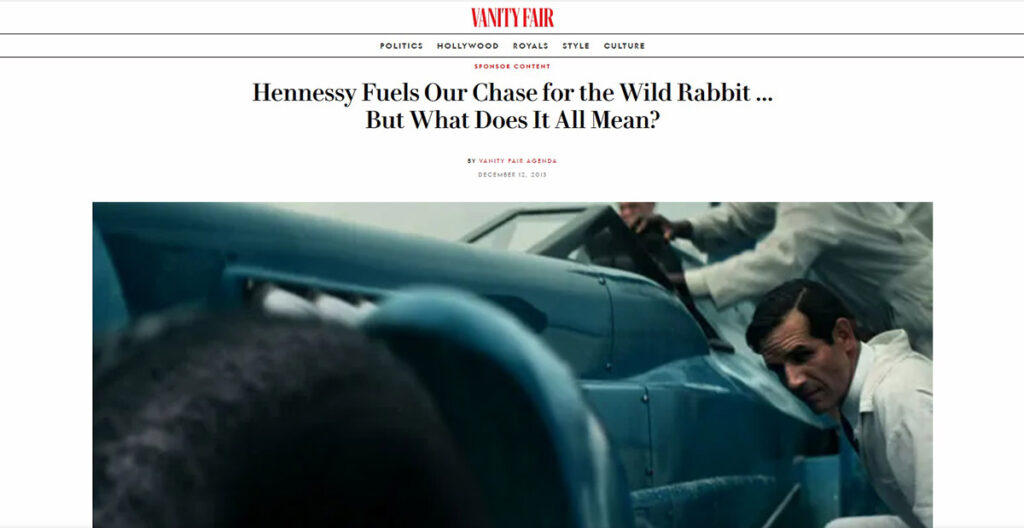
This campaign is a masterclass in lifestyle-driven native advertising. Partnering with Vanity Fair, Hennessy crafted an elegant narrative piece that aligned perfectly with the magazine’s chic and aspirational tone. Centered on a campaign about “the Wild Rabbit,” Hennessy’s metaphor for ambition and drive, the article draws parallels between the brand and English race car legend Sir Malcolm Campbell.
Featuring both video and written content, it offers behind-the-scenes insights into Campbell’s 1930s land-speed record and subtly links that bold legacy with Hennessy’s messaging. The piece is visually sophisticated and editorially rich, positioning Hennessy as more than a beverage.
It’s a symbol of the relentless human pursuit of greatness. The ad blends beautifully into Vanity Fair’s regular features, enhancing rather than disrupting the reader’s experience, and elevating brand storytelling to a cinematic level.
Altran Engineering in the Financial Times
Altran’s native ad in the Financial Times revolves around the company’s support for a student team competing in Elon Musk’s Hyperloop Pod Competition. The piece features high-production video storytelling that follows the students’ journey, humanizing the brand and showing its commitment to engineering excellence.
By showcasing innovation and the next generation of talent, the content aligns naturally with FT’s industrial tech section and appeals to the publication’s forward-thinking, business-savvy readers.
Altran subtly communicates its engineering prowess not by talking about its services directly but by spotlighting a meaningful partnership, making it a win for both narrative and branding. The campaign’s success lies in its balance between informative content and emotional resonance, demonstrating that native advertising can inspire while still achieving strategic marketing objectives.
ELLE and DOVE’s “Life under the Arm” Collab
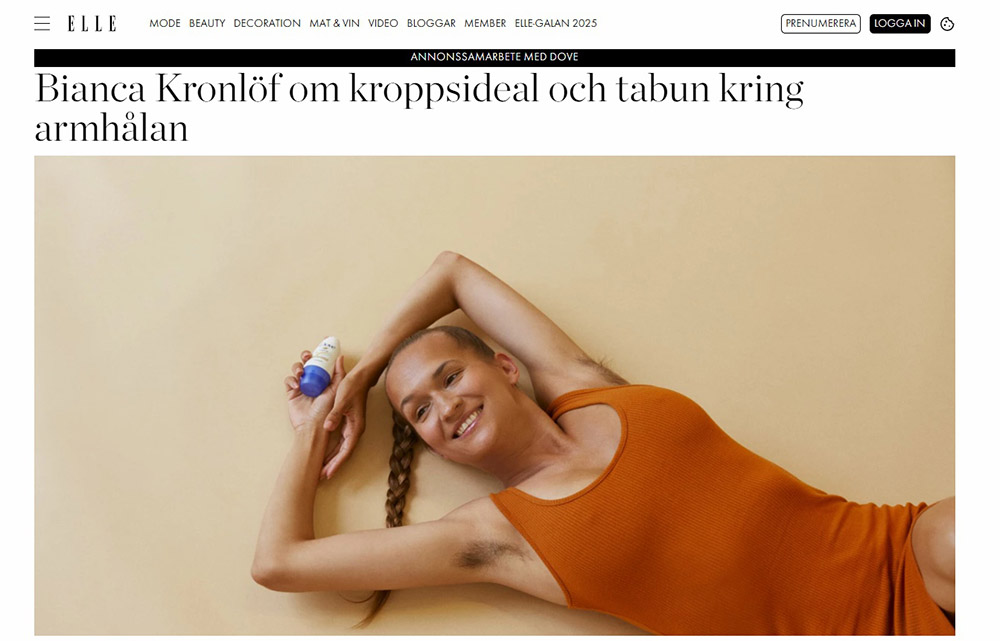
ELLE and Dove’s Swedish campaign “Livet under armen” (Life under the Arm) is a standout example of native advertising that blends cultural commentary with brand messaging. The campaign aims to normalize female body features, specifically the armpit, and spark conversations about self-image and beauty standards.
Featuring actress Bianca Kronlöf, the campaign includes a digital native article on ELLE.se and a social video where Kronlöf addresses taboos around body hair and societal pressures. By embedding Dove’s new deodorant product into a broader dialogue on body positivity, the campaign transcends traditional product placement.
It fits organically within ELLE’s editorial voice and adds genuine value to readers interested in feminist and beauty topics. The result is not only heightened brand awareness but also a meaningful contribution to social discourse, showing that purpose-driven messaging and advertising goals can coexist.
“Woman Going to Take Quick Break After Filling Out Name, Address on Tax Forms” by The Onion
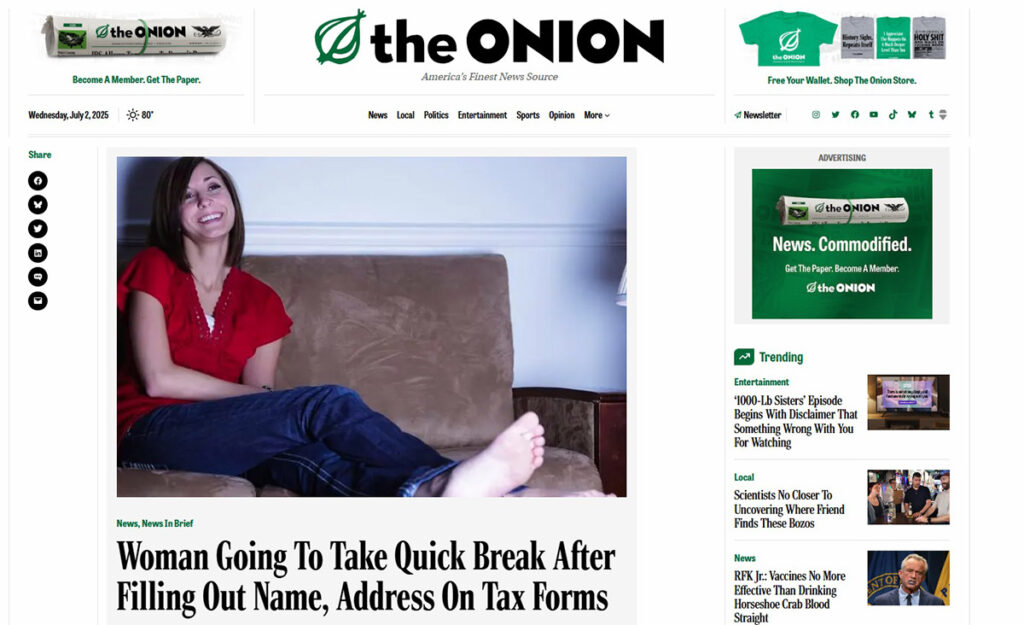
This satirical native ad, created by The Onion in collaboration with H&R Block, cleverly uses humor to engage readers on the otherwise dull topic of tax preparation. Though the article doesn’t mention H&R Block directly in the body, its association is made clear through surrounding banner ads and a sponsorship disclosure.
What sets this example apart is its flawless integration into The Onion’s signature comedic style. The fictional news story follows a woman exhausted after merely filling out the first few lines of a tax form, a humorous exaggeration that resonates with anyone who’s dealt with tax season.
Despite the absurdity, the piece subtly reinforces H&R Block’s brand by associating it with relief and simplicity in handling taxes. It’s a prime example of native advertising that entertains first, while still advancing brand objectives through contextual alignment and emotional resonance.
Land Rover – Dragon Challenge Video
Land Rover’s Dragon Challenge campaign is an adrenaline-fueled native ad disguised as a mini action film. Released on platforms like YouTube and distributed through social media, the video captures a Range Rover Sport conquering 999 stairs leading to China’s Heaven’s Gate at a 45-degree angle.
It’s visually gripping and suspenseful, delivering entertainment first while subliminally showcasing the vehicle’s durability and power. Instead of touting product specs, Land Rover tells a story of innovation, challenge, and triumph, aligning perfectly with its adventurous brand image.
The campaign also emphasizes record-breaking feats and global adventure, resonating with aspirational audiences. By combining cinematic quality with real-life performance, Land Rover effectively captivates viewers emotionally while reinforcing brand trust and enhancing the perception of its performance.
Storybook and Stimorol Collab
Stimorol, a Danish chewing gum brand, teamed up with Storybook to create a vibrant native campaign that associated the brand with music festivals and youthful energy. The campaign promoted a competition offering festival tickets in exchange for scanning QR codes on gum packages.
Using influencers aligned with Gen Z aesthetics, the content was distributed through platforms and native ad formats familiar to the target audience, like Instagram Reels. Storybook encouraged influencers to craft their creative spin, maintaining authenticity and increasing engagement.
The timing, leading up to major Danish festivals, helped maximize cultural relevance. This campaign is a prime example of how native advertising can drive engagement through cultural touchpoints, personalization, and influencer trust, all while embedding a clear brand call-to-action within a lifestyle narrative.
“10 Quotes Every Grad Needs to Read” by BuzzFeed
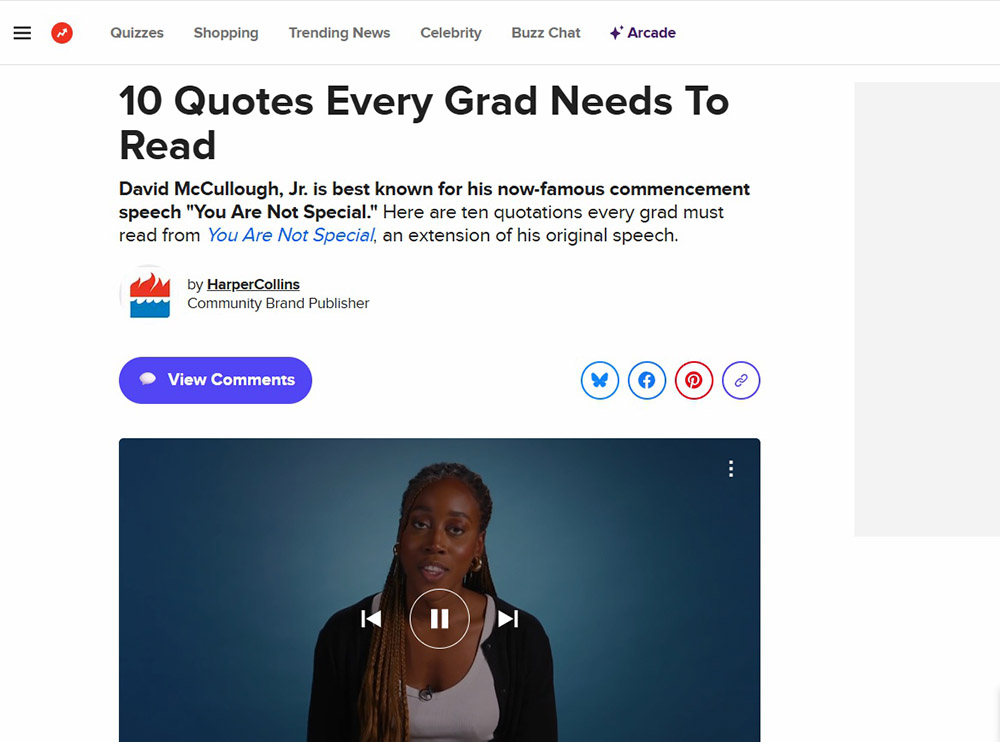
Sponsored by HarperCollins, this BuzzFeed native ad takes the form of a classic listicle titled “10 Quotes Every Grad Needs to Read.” Published during graduation season, the post aligns seamlessly with BuzzFeed’s typical content format, utilizing GIFs, pop culture references, and an emotionally resonant tone.
The quotes were drawn from motivational books, many of which were published by HarperCollins, subtly introducing the brand while focusing on inspiration and celebration. The campaign is a masterstroke in terms of seasonal timing and audience targeting, designed to resonate with young adults undergoing a significant life transition.
It succeeds in promoting books without using direct sales language, demonstrating how brands can leverage emotional relevance and editorial consistency to reach their audiences effectively.
Eni Energy on CNN
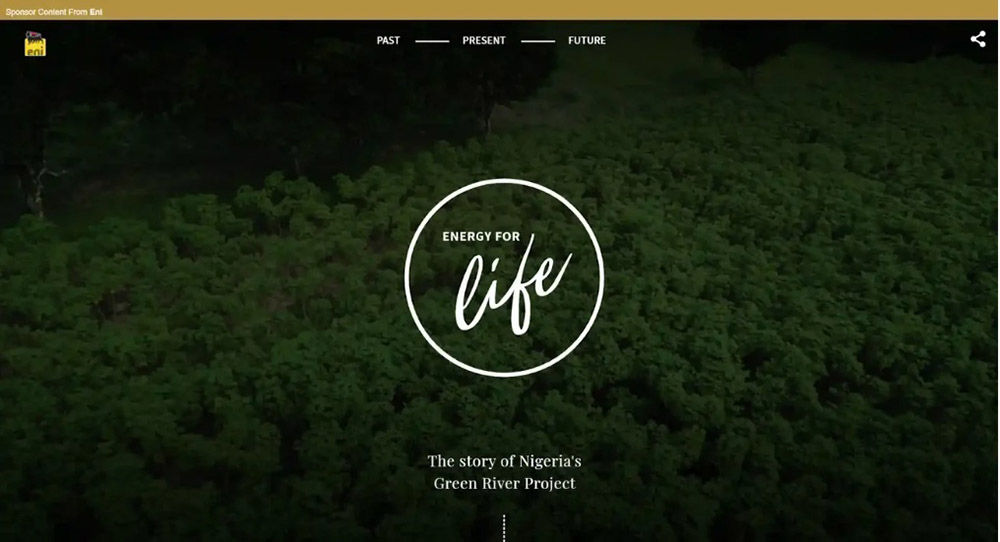
Eni, an oil and gas conglomerate, used native advertising on CNN to highlight its Green River Project, a sustainability initiative in Nigeria. This multimedia experience included video, animations, photography, and personal stories, divided into “Past, Present, and Future” to narrate Eni’s impact on local farming communities.
By framing the campaign around environmental stewardship and community upliftment, Eni distanced itself from negative industry stereotypes. The content appeared on CNN.com’s native advertising hub, offering a visually rich, immersive storytelling experience that mirrored editorial features in both tone and structure.
This campaign stands out for using native advertising not just as a promotional tool, but as a narrative strategy to reshape corporate perception and humanize a traditionally scrutinized industry.
Axel Springer and Coca-Cola Collab
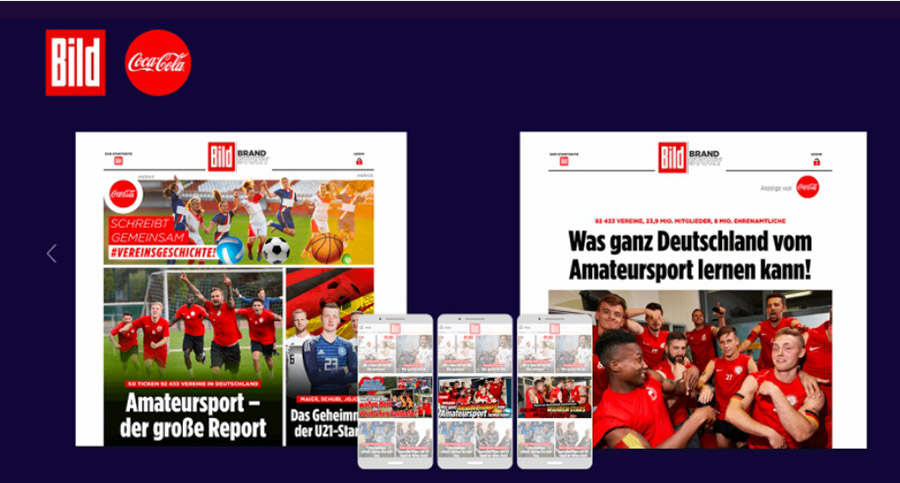
Coca-Cola’s partnership with German media giant Axel Springer created a wide-reaching native campaign focused on supporting amateur sports clubs. The project involved interviews, stories, and video content published across Springer-owned platforms like BILD.de.
It culminated in a dedicated brand hub showcasing local athletes and sports narratives that built an emotional connection with readers. The messaging emphasized Coca-Cola’s role in grassroots community development rather than product promotion. With contributions from real athletes and club supporters, the campaign achieved authenticity and local relevance.
This initiative demonstrates how native advertising can be scaled across multiple media formats and touchpoints while maintaining cohesion and narrative integrity. It’s a strong example of brand storytelling rooted in values and civic engagement.
Final Thoughts
As more companies embrace native advertising, the line between storytelling and advertising continues to blur for the better. By aligning content with user interests and platform aesthetics, brands can build deeper relationships while delivering real value. Don’t be left behind!