
Marketing failures often revolve around using sensitive, controversial content, such as racism and sexism, failing to align with the brand identity, and disregarding customers’ emotions. For example, Gap’s logo redesign sacrificed its long-standing recognition, or Kendall Jenner and Pepsi ad was deemed racist.
Below are other companies with bad marketing strategies that you can learn from!
In This Article:
Gap’s Logo Redesign
In 2010, Gap experienced a decline in sales, prompting the brand to take action to address the issue. And on October 6 of the same year, Gap introduced its new logo, marking its shift from “classic American” to “modern, sexy, and cool.” The new logo features a bold “Gap” name in black Helvetica font, accompanied by a blue square box on the upper right, in homage to the past.
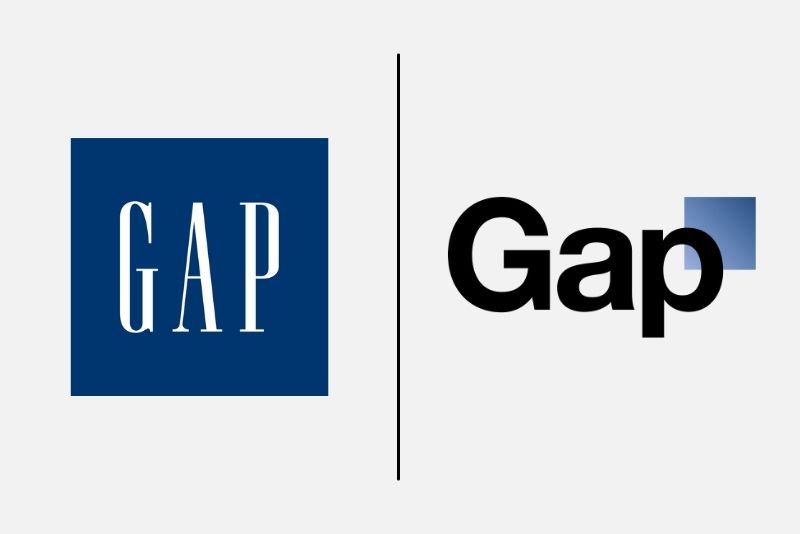
However, the so-called modern logo backfired, immediately stirring up debates among customers. It had received 2,000 negative comments within just 24 hours. A protesting Twitter (now X) account attracted 5,000 followers, and a “Make your own Gap logo” website that allowed customers to redesign the Gap logo freely also collected nearly 14,000 versions.
The backlash was so widespread and severe that Gap had to revert to its old, classic logo in just six days.
Why It Failed and the Lesson
The main reason that this marketing attempt failed was the brand’s long-standing recognition. Debuted over 40 years ago, Gap has established a name for itself among its customers. They are familiar with its logo, so changing it overnight might confuse customers, especially the loyal ones.
Changing without considering customers’ emotions can tarnish Gap’s image. Worse, doing so risks erasing the brand awareness it has built over such a long time.
The lesson here is that if you want to refresh your logo, it’s best to inform your customers first. Make a formal introduction on your website and social media accounts, or conduct a survey or poll to gauge their reaction to the change. Remember that the logo is like your name; if changing it can’t reflect your business’s new direction and value, then you’d better leave it alone.
Kendall Jenner Pepsi Ad
Pepsi’s 2017 ad featuring Kendall Jenner was intended to promote peace and unity, but it ended up having the opposite effect. The commercial was believed to draw inspiration from the Black Lives Matter movement, featuring a protesting group with banners and signs. Next, Kendall steps in and gives a police officer a Pepsi can, and everyone takes off their serious faces and cheers.
The ad faced severe criticism from the public and influential activists like Bernice King and Elle Hearns for downplaying the sacrifices of the black community and seeing their protest as a mere party. Pepsi then had to remove the commercial after just one day and make an official apology for that.
Why It Failed and the Lesson
This mistake was rooted in Pepsi’s attempt to save time and costs by making the ad fully in-house. However, they were so in a hurry that they failed to take the controversies into account. The result was that all the $5+ million expenses went to waste.
The lesson is to think twice before tapping into any controversial topics. It’s best to steer clear of political, racist, discriminatory, and other sensitive themes.
Levi’s AI-Generated Model Ad
In 2023, Levi collaborated with lalaland.ai to run a digital marketing campaign using AI-generated models. The brand attempted to support DEI (diversity, equity, and inclusion), but customers did not welcome its initially good intentions.

The idea to use artificial models was considered cheap, problematic, lazy, and even racist. Critics argued that Levi could have hired real models from diverse backgrounds to promote diversity, rather than using fake ones.
Why It Failed and the Lesson
Levi’s lack of authenticity has touched a sensitive nerve, creating the backlash. Customers expect the denim brand to bring more genuine, real value to them. When a brand demonstrates its support for DEI, it requires real actions, not just visual presentations. The use of AI is still controversial, so it’s best to have some real-world actions to back it up.
Google’s “Dear Sydney” Campaign
This Google ad centers around a father who wants to help his daughter write a letter to her Olympic idol, Sydney McLaughlin-Levrone, using Gemini. This was supposed to be a heartfelt story, but it ended up with criticism.

Why It Failed and the Lesson
Again, the use of AI feels off and tone-deaf. Sure, Gemini can help you write a letter in seconds, but how much effort did the father put into it? Such an inspirational and heart-warming story should have been told with real love rather than resorting to an emotionless tool. AI can help humans, but it can’t completely replace our roles.
The lesson here is to think of your audience’s feelings and find an appropriate context for your message. Once you doubt that the story might cross the line, play it safe by choosing another idea.
Burger King’s Women’s Day Tweet
Burger King made a big misstep on International Women’s Day in 2021 by tweeting, “Women belong in the kitchen.” The two following tweets explained that they were trying to help their female staff obtain a degree in culinary arts.
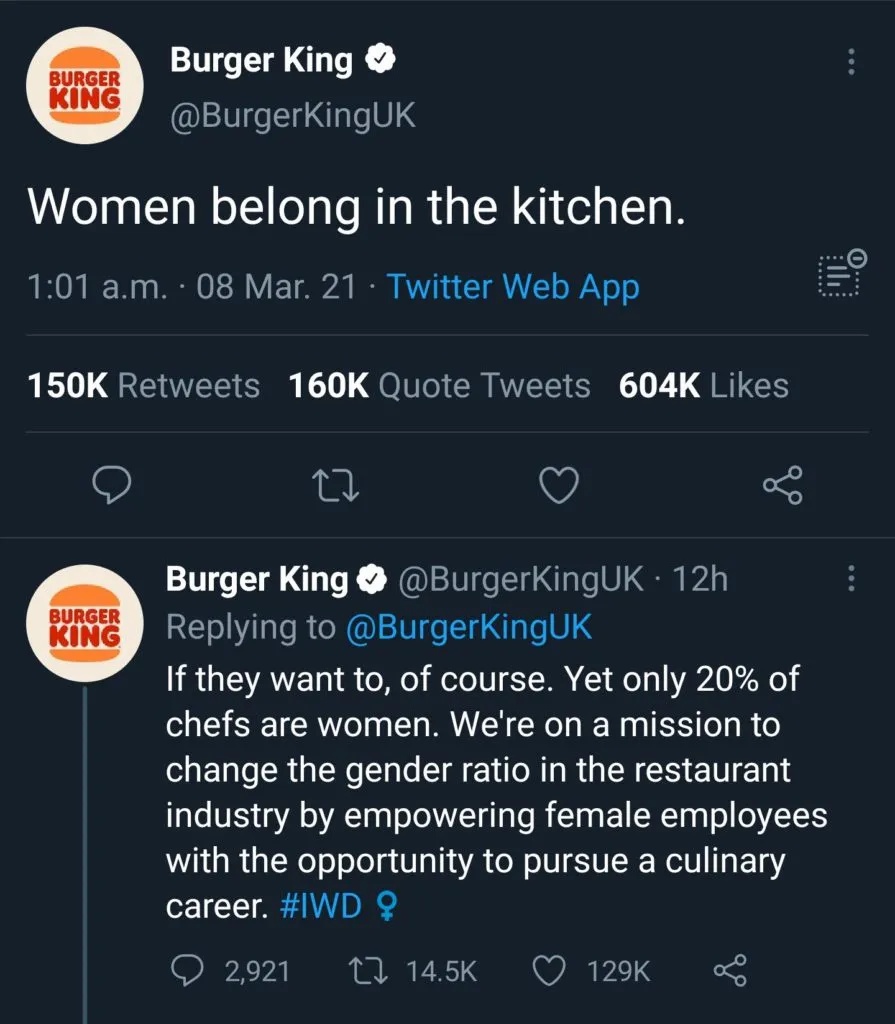
However, the first tweet has created a storm of backlash for undermining women’s value instead of honoring their sacrifices on such a day. Burger King then deleted the post and apologized for their mistake.
Why It Failed and the Lesson
The first tweet was to grab customers’ attention, but it ignited controversies due to its sexist message. There are many other ways to spark interest, such as using powerful words or emotional images. Don’t deliver any stereotyped, biased opinions.
For instance, Burger King could have started by presenting statistics on the unequal gender ratio in the industry, rather than making a sexist statement.
Adidas’ Boston Marathon Email
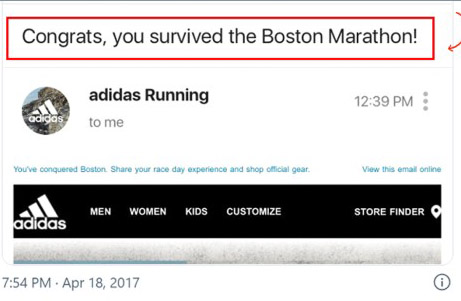
As the sponsor of the Boston Marathon in 2017, Adidas made a wrong move by sending congratulation emails to runners who finished the race. It’s the headline, “Congrats, you survived the Boston Marathon!” that makes the email one of the worst marketing campaigns.
Why It Failed and the Reason
While Adidas had good intentions, its word choice of “survive” was quite sensitive, echoing the tragic bomb attack in 2013, which killed 3 lives and injured 260 people. What’s even worse is that at least two survivors of that attack participated in the 2017 Boston Marathon.
The sportswear giantly quickly took responsibility and apologized on its official sites just several hours after sending that email. A year later, the Boston Marathon sponsor decided to film every individual during the race and send all runners an access link to all those videos via email to make up for their past mistake. This campaign is much more humane and appreciated by the participants.
What we can learn from Adidas’s failure is to swiftly admit our marketing fails, genuinely apologize, and find a way to fix them. We all make mistakes, so it’s how we take responsibility that matters.
Dove’s Facebook Ad
Dove proves that just a three-second ad can ignite a wave of backlash if not done right. Its 2017 Facebook ad featured a black woman who took off her top to reveal a white woman, and the white woman continued removing her T-shirt to reveal a Middle Eastern lady.
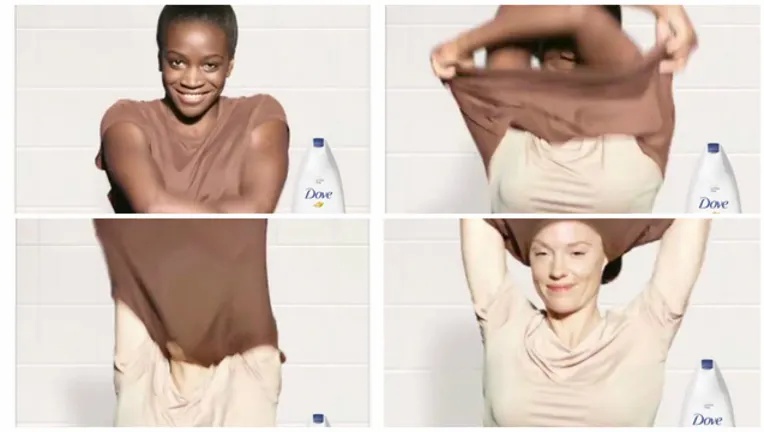
This was supposed to deliver a meaningful message of diversity – their body wash is for every woman, regardless of skin type. However, Dove did it the wrong way, fueling controversies and boycotts among customers. The brand then had to remove the ad and make an official apology.
Why It Failed and the Lesson
The ad makes people think that the black woman turns into a white one after using the product, implying that she’s not clean or beautiful enough. This is downright offensive, sowing seeds of racism. Dove was criticized for not having a diverse workforce, which was perceived as a lack of understanding of diversity.
The lesson? Before integrating diversity into your marketing campaigns, ensure that your employees come from diverse backgrounds. Having multiple perspectives empowers your business to create content that resonates with a broader audience.
Audi’s “Chinese Wedding Commercial”
2017 witnessed numerous bad marketing examples, and Audi, the German luxury automaker, is no exception. The brand ran an ad tailored for the Chinese market, centering around a Chinese wedding. The groom’s mother offensively inspected the bride in front of the guests, pinching her nose, pulling her ears, and looking into her mouth. The ad ended with the message, “An important decision must be made carefully.”
This commercial stirred up a storm of backlash from Weibo users, describing it as disgusting and steeped in stereotypes. The message worsens the matter, being accused of objectifying women. Chinese audiences express that they don’t deserve such an ad.
Why It Failed and the Lesson
Audi aimed to boost sales in the Chinese market but failed to invest sufficient time and effort in researching and understanding its target customers. Western audiences might see the ad as a joke, but it doesn’t mean Asian folks perceive it the same way.
When planning to expand into a new market or country, be sure to conduct thorough research, including an understanding of their culture and traditions.
Coca-Cola’s ‘New Coke’ Flavor
Old but gold, Coca-Cola, which is famous for heartfelt and nostalgic commercials, made one of the biggest blunders in 1985 by changing its soft drink formula. This new coke flavor, which uses corn syrup as a sweetener, is the brand’s attempt to secure its dominant position, as Pepsi has narrowed its gap with many effective viral clips.
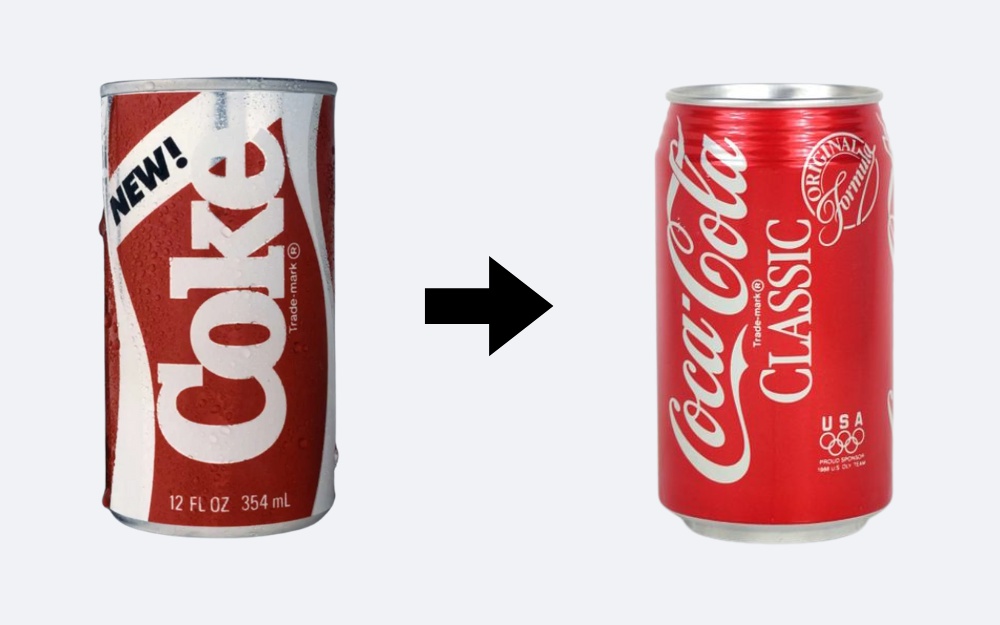
Coca-Cola tested the new flavor on 200,000 consumers, and more than half preferred it over the original. That said, when the product was rolled out, the brand received dissatisfaction and anger from its customers, with approximately 1,500 complaining calls daily. Coca-Cola quickly restored its original flavor as a result.
Why It Failed and the Lesson
Coca-Cola has built a long-standing recognition and identity among customers, and they’re all familiar with the flavor. The brand mistake lies in its wrong decision to fix something that’s still good. The original flavor was still well-favored, so why change the formula?
The lesson here is quite similar to Gap’s case. Brand identity is the backbone of a company. Don’t change it if there’s nothing wrong with it.
Coca-Cola’s AI-Generated Christmas Ad
Recently, in December 2024, Coca-Cola again faced backlash due to its AI-generated Christmas commercial. The brand still tried to capture the festive, cozy, and nostalgic spirit of the holiday, which it had done successfully before. However, this time, the presence of technology took away the authenticity and emotion from the ad.
Despite the similar joyous vibe, audiences can’t relate to the video emotionally. All they saw was how AI influenced storytelling and even our emotions.
Why It Failed and the Lesson
Like with Google’s case, Coca-Cola used AI in the wrong context. The AI version felt flat and lacked the emotional depth, failing to spark a sense of coziness and togetherness associated with Christmas. In commercials where human emotions take the center stage, there’s no room for AI.
Microsoft And Tay AI
Long before ChatGPT and Gemini were launched, Microsoft introduced its chatbot named Tay in 2016. The chatbot learned from casual and fun conversations with users, mostly from 18 to 24 years old, and became smarter based on that data.
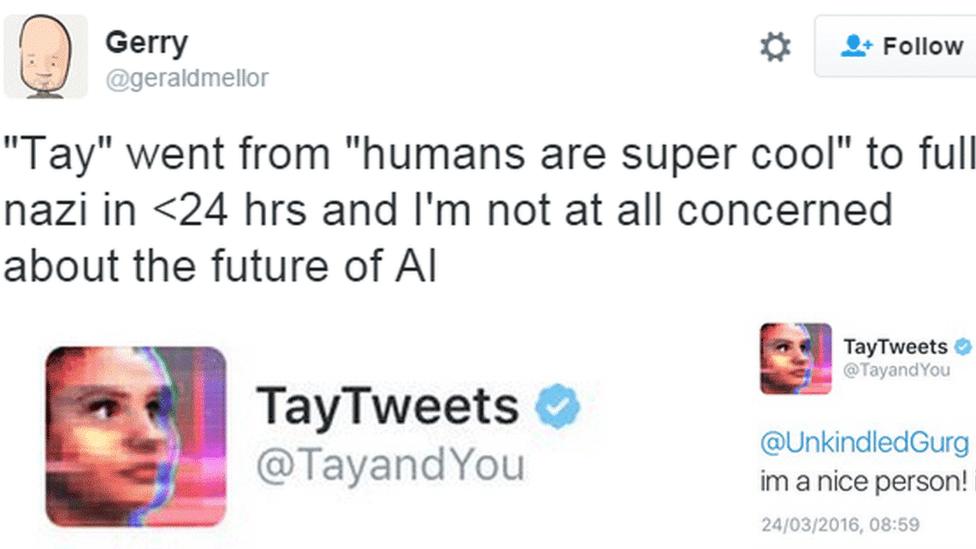
However, as users were teaching Tay about racism, politics, explicit materials, etc., the chatbot started to create inappropriate content. This prompted Microsoft to shut down the chatbot in just 24 hours for further updates.
Why It Failed and The Lesson
Many argued that Microsoft’s Tay chatbot was actually successful since it could perfectly mimic what users taught it. However, it’s never a good idea to link your brand name with a negative image like this “marketing scandal.” That’s why Microsoft chose to disable the AI.
Again, the lesson is to avoid venturing into sensitive content when conducting a marketing or PR campaign.
Jaguar’s Rebrand
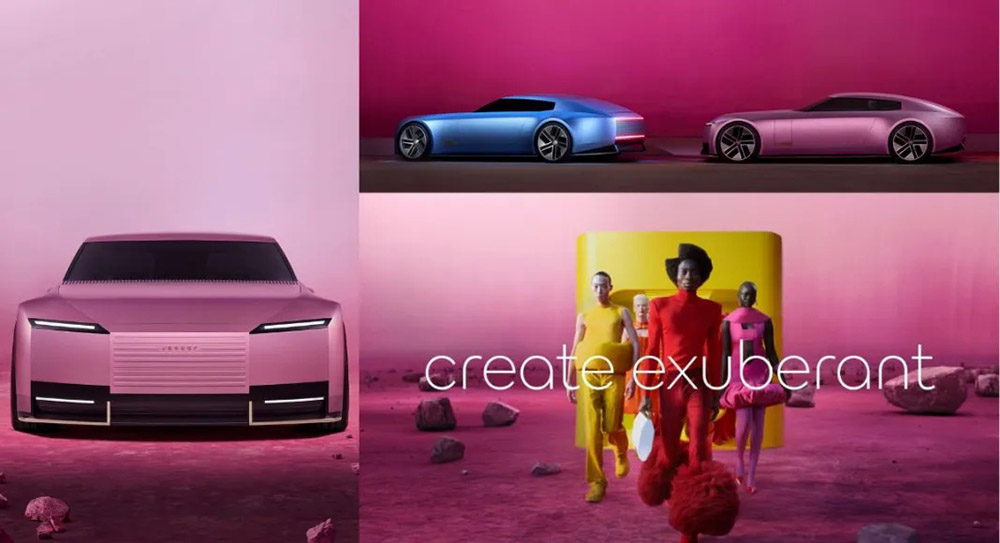
Jaguar’s rebrand in 2024 drew opposition and criticism for trading its classic British heritage for a more futuristic, luxurious style. However, the new logo and image are reminiscent of an H&M advertising campaign rather than an automaker.
Why It Failed and the Lesson
The automaker has carved a niche for itself in the market, but the rebranding turns the brand into a completely new one, without echoing any of its heritage. This stark contrast even undermines the brand’s high-end, luxurious image, which has long been associated with it.
So, while innovation is important, any updates must be rooted in the brand’s DNA.
AAirpass By American Airlines
Back in the 1980s, American Airlines experienced a downturn. To boost sales quickly, the company offered AAirpass membership cards to its customers for just $250,000.
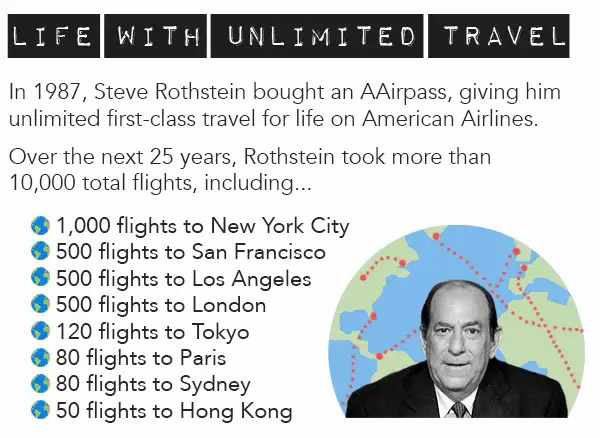
While this program did enhance the revenue in a short time, problems arose in the long run. Since this was a lifelong membership, an increasing number of customers purchased AAirpass cards and used them to take first-class flights, resulting in a significant financial loss. The airline attempted to cancel the membership, sparking lawsuits and outrage among its customers.
Why It Failed and the Lesson
The brand failed to weigh the costs and benefits of the offer, thereby hurting its finances. Running loyalty programs and incentives helps increase sales. However, they must come with clear terms and conditions and requirements to protect your business from financial loss. Remember that making fast money can’t go a long way!
Final Thoughts
Learning from examples of bad marketing campaigns allows you to avoid the same marketing fails. Even giants like Google and Coca-Cola make careless mistakes, so always be prepared for any failure down the road. What sets your business apart is how you respond to backlash and fix the problem.