Artificial intelligence has found its way into various business departments, especially in digital marketing, which is closely tied to the online world. However, digital marketing with AI is not all about convenience, speed, and efficiency. There exist some challenges that businesses have to be aware of to make the most out of these tools. We’ll walk you through the ins and outs of this, along with an expert guide on how to use it effectively!
In This Article:
What Is AI In Digital Marketing?
Marketers have been leveraging artificial intelligence for decades, but it was not until 2022 that the debut of ChatGPT revolutionized the way people use AI in digital marketing. In particular, AI tools are present in almost every step of marketing, from market research, data collection, and data analysis to content creation and customer support.
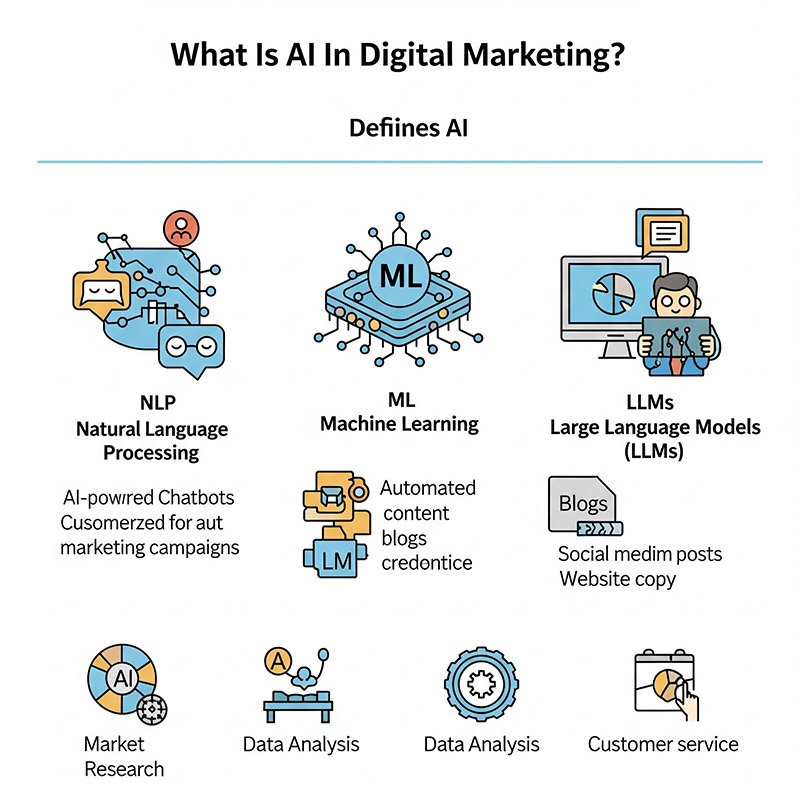
These tools rely on advanced technologies, including:
- Natural language processing: Thanks to this technology, computers can understand and interpret human language, thereby delivering corresponding responses to address users’ issues. NLP also empowers AI to participate in conversations with humans.
- Machine learning: This tech allows AI assistants to learn and update accordingly based on the collected data without needing further programming. For example, AI tools can predict user preferences based on their purchase history and adjust marketing strategies to align with the target audiences.
- Large language models: LLMs are responsible for generating human-like conversations, making AI tools more user-friendly assistants. AI models with LLMs can create personalized content, emails, and ads that resonate with target customers.
Benefits & Challenges Of Artificial Intelligence In Digital Marketing
Benefits
Boost Productivity & Efficiency
The most obvious way that AI benefits businesses is automation. AI models will take care of simple, repetitive tasks like call routing, data entry, etc., freeing up labor and saving lots of time. So, human agents and marketers can focus on more complex, urgent tasks, enhancing productivity and efficiency.
A 2025 report by CoSchedule reveals that 83% out of over 1,000 marketers agree that using AI boosts their productivity.
Facilitate Personalization
Personalization is the key to successful digital advertising, but things might be challenging as your business expands. Large-scale personalization requires you to deal with a vast data pool. This is when AI models come in handy, handling a large database and facilitating personalization throughout different departments.
Provide Data-driven Insights
Data-driven decision-making is a must in all businesses. AI tools can collect customer information and provide insightful data to inform your decisions. For instance, they can detect which communication channel offers the highest response and engagement rate. Then, marketers can prioritize running marketing campaigns on those online channels for optimal results.
Optimize Content & Targeting
AI also assists digital marketers in creating and targeting content. Based on the analyzed data, AI models understand customer preferences and behavior. Therefore, they will create tailored content that better resonates with the target audiences.
Enhance Customer Experience & ROI
For one, delivering personalized content makes customers feel valued and relatable, and your ads become less salesy and aggressive in their eyes. Not to mention, AI assistants like chatbots can work around the clock, ready to address customer issues promptly. This reduces resolution time and enhances customer experience, eventually resulting in more leads, sales, and ROI.
Challenges
Bias
A study by University College London shows that AI inherits our own biases and tends to amplify them. So, when collecting data, AI models also interpret our prejudices and stereotypes and give out unfair outcomes. These biases might hinder the marketing campaign’s reach to certain groups of customers.
Transparency
Sure, AI tools speed up data analysis and the entire process, but here’s the catch: these models only deliver results without any explanations. This leads to a lack of transparency and leaves other members of the marketing team obscure. A clear understanding of the decision is important to foster effective teamwork.
Ethics & Data Privacy
The privilege to access vast amounts of data can be a double-edged knife. Since AI tools are unaware of ethical and legal standards, they might leak sensitive personal information, posing a risk of data privacy and ethical violation.
Complex Integration
The legacy systems of some traditional businesses might not be compatible with AI, making automation a challenge. Not to mention, AI integration requires specialized knowledge and profound insights for seamless operation and maintenance. That’s why many marketing teams have to turn to outsourced experts to fill these knowledge gaps.
8 Smart Ways To Use AI For Digital Marketing
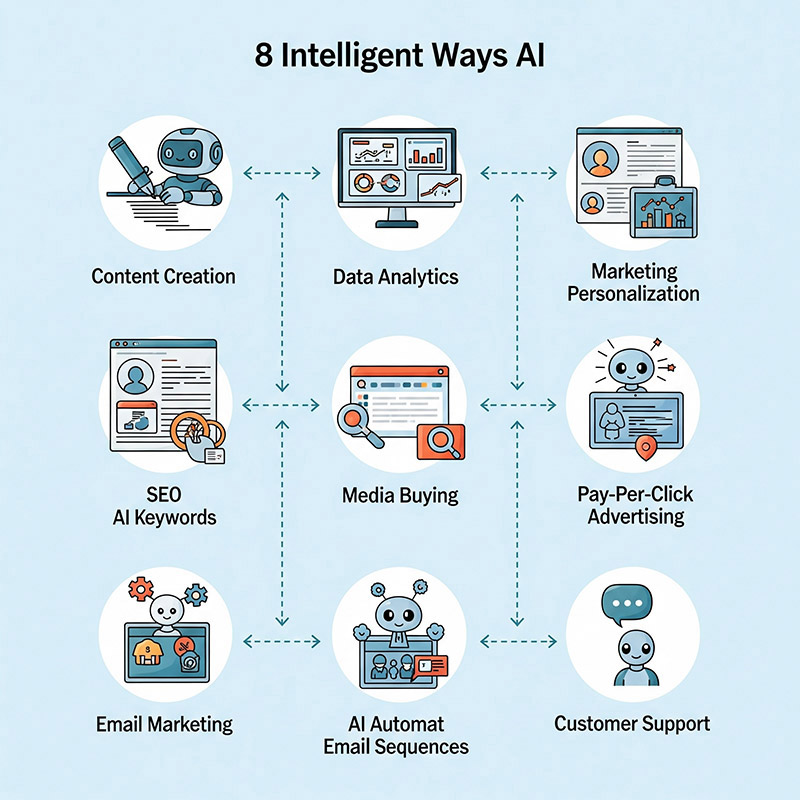
Content Creation
Content creation remains one of AI’s competitive edges, with 93% of marketers utilizing AI tools for faster content generation in 2024 (according to Monkey Survey). GenAI models, such as ChatGPT and Gemini, can benefit you in various ways regarding this.
For one, they assist you in brainstorming new ideas tailored for a new trend or a certain target audience. Then, based on the outlined draft, they continue to craft a complete piece of content suitable for different platforms, like social media posts, blog posts, emails, video scripts, and so on. Even better, you can create engaging images and videos using tools like Sora and Midjourney to illustrate your content.
AI tools like Grammarly can also edit and fix spelling and grammatical errors in your writing. However, AI sometimes includes fabricated facts, biased opinions, or unnatural expressions in the content, so proofreading requires the involvement of human editors. A Hubspot’s finding reveals that only 7% of marketers publish AI-generated content without editing.
Data Analytics

Marketers have been using AI for data analytics for a long time. AI models can deal with a large database without hassle. They will collect, analyze, and provide actionable insights into customer behavior, preferences, and buying patterns. AI tools even go the extra mile by grouping customers with shared characteristics for better segmentation and targeting.
From the provided high-quality data, marketers also have an overview of the customer base and adjust their AI-driven marketing campaigns accordingly.
Marketing Personalization
AI has redefined customer experience by streamlining large-scale personalization. Once these tools are done with the data analytics process, they rely on the interpreted insights to offer tailored customer experience on various digital channels, including websites, emails, and social media platforms.
For instance, if a customer’s browsing history shows that they spend more time on a certain product, a personalized ad will show up on their screen when there’s a special deal for that product.
This is also what major brands are doing to promote personalization. Take Netflix, for example. The media company analyzes viewers’ viewing patterns and suggests movies/shows that resonate with their tastes. Likewise, Amazon also provides personalized content recommendations based on each visitor’s preferences.
SEO
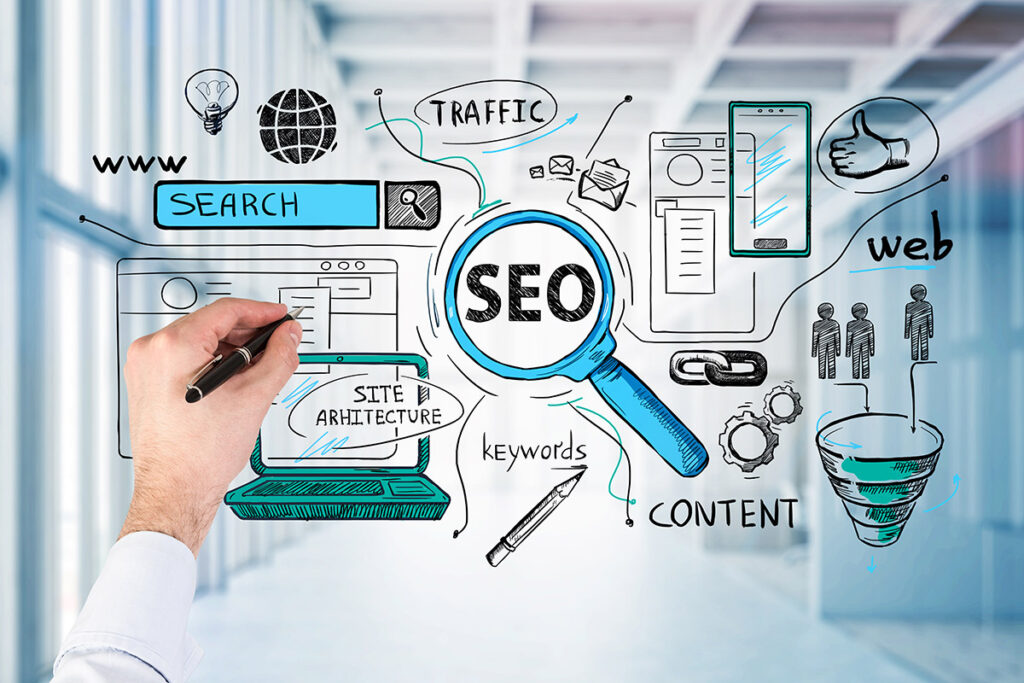
The recent integration of AI Overview on Google further highlights the role of AI in search engine optimization (SEO). Google crawlers, also known as Googlebots, will automatically scan through millions of web pages to rank them. So, if your content is optimized based on certain standards, it’s more likely to secure a higher rank and reach more potential customers.
AI tools can help you with automatic content optimization within a short time. They will research high-volume keywords, create relatable headings and tags, and tailor your content based on user behavior, SEO trends, and algorithm updates, if any.
As voice search is witnessing a surge in users, you should also seize this chance to update your content. For example, use AI tools to generate more conversational content, create FAQ sections, or target more question-based keywords.
Media Buying
Running ads on a third-party website or billboard is an effective way to attract more potential customers if you choose the right placement. With the help of AI, you don’t have to spend days researching and hand-selecting suitable websites. These tools assist you in shortlisting the most effective ad placement and ad spend in no time.
For example, the Smart Bidding feature on Google analyzes data, such as time, location, and user behavior, in real-time, allowing you to tailor your bids to each user’s search. Performance Max is also an amazing AI-based function on this search engine, enabling you to optimize a marketing campaign across Search, Gmail, YouTube, Maps, and more.
Pay-Per-Click Advertising
If you’re earning from clicks through ads, AI can enhance your income via automation. Tasks like keyword research, content creation, bidding and targeting, ad scheduling and placement, predicting trends, and fraud detection can all be done by AI assistants. This not only saves time but also boosts the CTR. Many measurement tools are also available to help you track and manage your ads more effectively.
Email Marketing
If you think that email marketing is out of date, here’s the kicker: According to Taboola, about 73% and 66% of B2B marketers still distribute their marketing content via email newsletter and email in 2024, respectively. The report also reveals that every $1 spent on email marketing generates a whopping $36.
To maximize the return on investment, you can turn to automated email marketing software. These tools can craft emails tailored to each customer, analyze email performance like effective subject lines, curate email lists, perform A/B testing, enable dynamic content, etc.
Customer Support
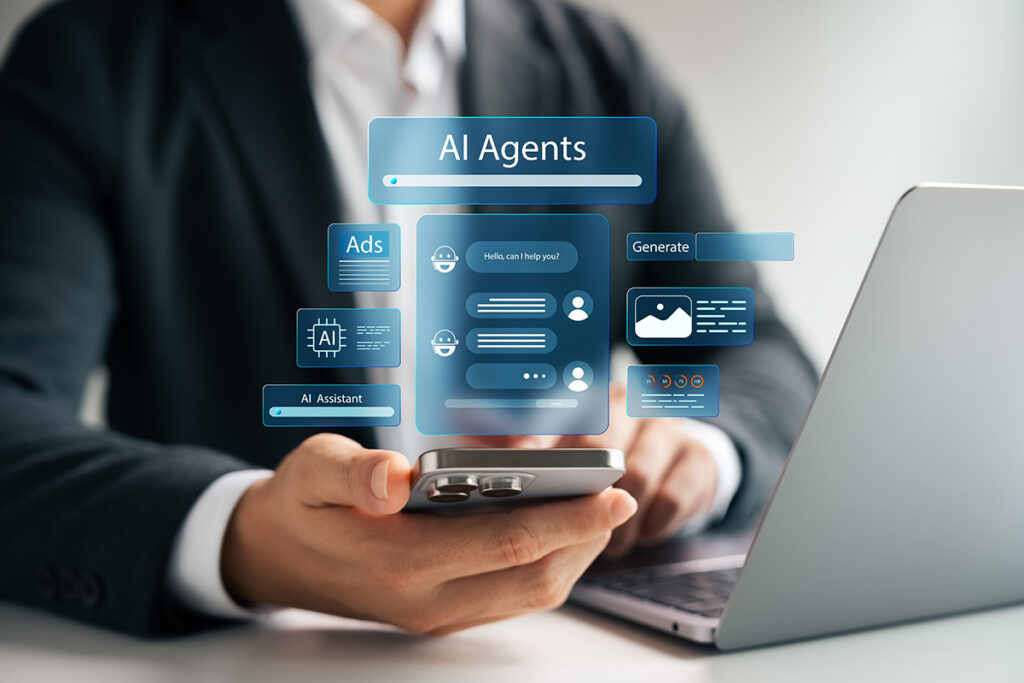
Marketing goes beyond finding potential customers and driving sales; it should involve post-purchase customer care to enhance customer experience and loyalty. This is when AI-powered chatbots and virtual assistants come in handy.
They can deal with mundane, daily tasks, answer common questions, and address simple issues. Human customer support agents will have more time to handle complex problems or urgent tasks, ensuring customer satisfaction.
Case Studies – How Businesses Use AI In Digital Marketing
BuzzFeed: Crafting Headlines That Click
BuzzFeed uses AI to analyze massive datasets from previous content performance to identify what types of headlines drive the highest engagement. Their algorithms detect successful phrasing patterns, emotional triggers, and reader behavior insights to produce click-worthy titles. This enables the platform to maintain high traffic and consistent audience interest.
Persado: Emotionally Intelligent Marketing Copy
Persado leverages AI and natural language processing to create emotionally resonant marketing messages. By analyzing language patterns and emotional cues from millions of data points, Persado generates content for emails, ads, and social media posts that significantly boosts customer engagement.
Businesses report up to a 49% increase in conversion rates using Persado’s AI-optimized copy.
AdRoll: Smarter Ad Spend and Better ROI
AdRoll applies real-time machine learning to automate ad bidding and optimize placements across devices and platforms. Its AI evaluates user behavior, conversion likelihood, and performance data to adjust bidding strategies on the fly. Clients have seen up to 2X improvement in conversion rates and a 50% reduction in customer acquisition costs.
H&M: Personalized Shopping via Chatbots
H&M introduced the “Knixpert” chatbot to enhance its mobile shopping experience. This AI assistant suggests outfit combinations based on customer style preferences and contextual inputs like occasion. The chatbot’s visual and conversational interface led to a noticeable spike in sales and user satisfaction, especially during campaign launches like the summer 2019 collection.
The Future Of Digital Marketing And AI
The future of AI in digital marketing is centered on increased automation, enhanced personalization, and ethical oversight. As tools evolve, marketers will rely more on AI to handle repetitive tasks, freeing up time for creativity and strategic work. Key developments include:
- Wider use of predictive analytics to optimize campaigns and personalize customer journeys.
- More advanced generative AI for content creation, requiring human guidance to ensure quality.
- Ad optimization and contextual targeting in a cookieless world, as seen with tools like Outbrain Onyx.
- Ethical challenges around bias and fairness, demanding human oversight and diverse development teams.