

You’ve probably heard about digital PR, but what does it actually do? Simply put, it’s public relations for the digital world. It’s about getting your brand mentioned in online articles, building links that help your site rank, and sharing stories people want to read. In this guide, we’ll cover everything about digital PR and how you can use it to grow your brand online.
In This Article:
What Is Digital Public Relations?
Digital public relations (digital PR) is a strategic online marketing discipline that blends traditional public relations principles with digital tactics to enhance brand visibility, build authority, and improve search engine rankings. Unlike conventional PR that targets print or broadcast media, digital PR focuses on earning placements in online media such as news websites, influential blogs, podcasts, and digital publications.
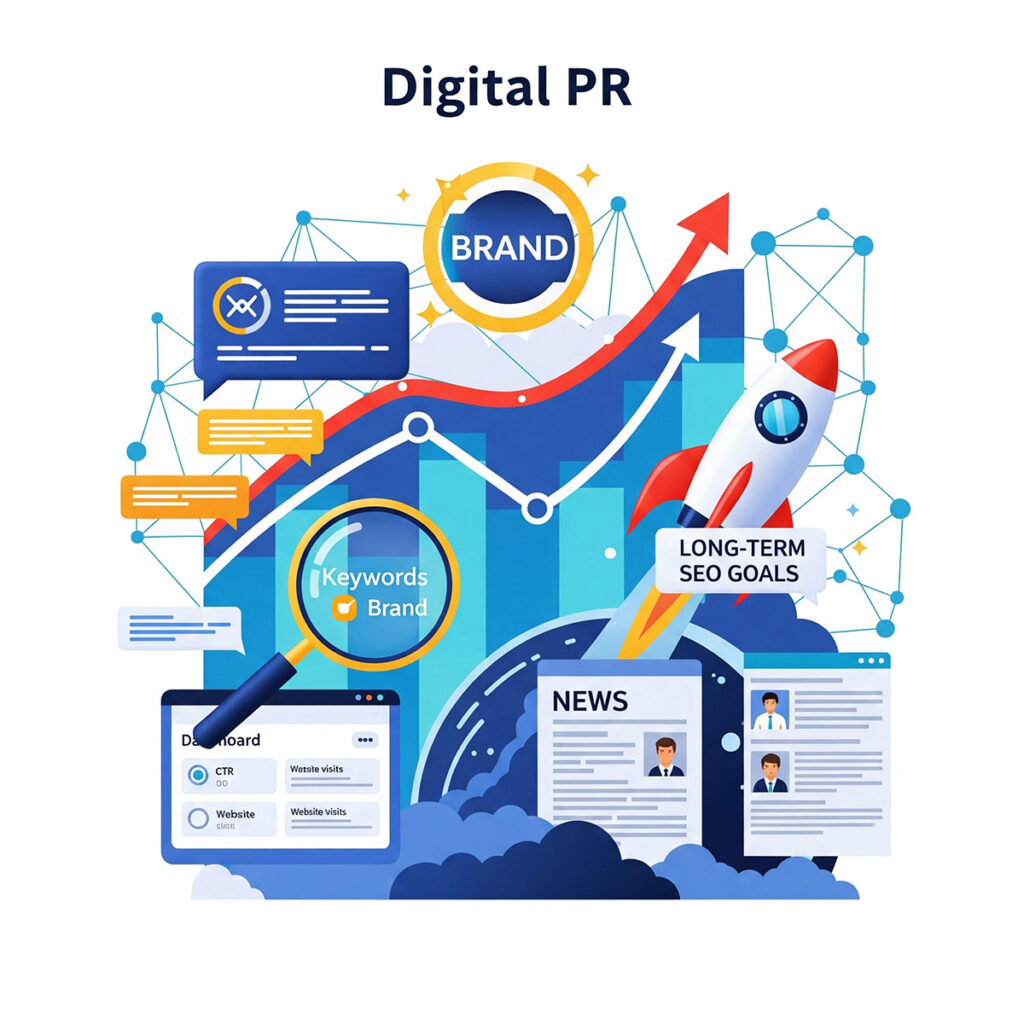
At its core, digital PR involves creating compelling, newsworthy content and leveraging media outreach to secure editorial coverage that includes backlinks to the brand’s website. These backlinks are not just citations; they serve as powerful trust signals for search engines like Google, improving a website’s domain authority and organic search visibility. Additionally, digital PR strengthens brand credibility by associating it with high-authority sources while also aligning with SEO goals by supporting Google’s E-E-A-T criteria: Experience, Expertise, Authority, and Trust.
Typical digital PR activities include media pitching, guest posting, data storytelling, thought leadership contributions, newsjacking, influencer collaborations, and optimized press releases. These efforts are designed not just to generate buzz but to yield measurable SEO benefits, sustained traffic growth, and enhanced brand recognition across digital channels.
How It Differs From Traditional PR
Traditional PR typically focuses on securing placements in print newspapers, magazines, TV, or radio, emphasizing brand awareness and sentiment management. These campaigns are often harder to quantify in terms of direct impact.
Digital PR, on the other hand, operates entirely within the online space. It seeks to secure placements in digital publications, blogs, and podcasts, with a strong emphasis on earning backlinks to improve search engine rankings.
Unlike traditional PR, which prioritizes messaging and visibility, digital PR is deeply integrated with SEO. The value of a digital campaign is often measured by the number and quality of backlinks earned, referring domains, organic traffic growth, and improvements in search engine results pages (SERPs).
Moreover, digital PR campaigns allow for greater creativity and real-time responsiveness. Tactics like newsjacking and data storytelling thrive in a fast-moving digital landscape, where speed and originality often lead to wider coverage and shareability.
Benefits Of Digital PR
Digital PR provides both short-term visibility spikes and long-term SEO gains:
- Improved search engine rankings: Digital PR helps websites earn backlinks from authoritative online media outlets. These high-quality links signal trust to search engines, improving domain authority and organic search visibility.
- Increased website traffic: By placing content on high-traffic platforms, digital PR drives qualified visitors directly to your site. These visitors are often more engaged, having come through trusted sources.
- Enhanced brand credibility and authority: Being featured in reputable online publications builds trust and positions your brand as a thought leader. This aligns with Google’s E-E-A-T standards.
- Greater online visibility and awareness: Creative, shareable campaigns amplify your presence across the web. This leads to more mentions, shares, and engagement on social media and news platforms.
- Measurable performance and ROI: Unlike traditional PR, digital PR provides tangible metrics such as the number of backlinks, referring domains, traffic spikes, and share of voice. These KPIs offer a clear view of campaign effectiveness.
- Support for long-term SEO goals: Editorial backlinks earned through digital PR remain valuable over time, contributing to sustained SEO growth. This makes each campaign an investment in lasting online visibility.
- Boosted click-through rates (CTR): Familiarity built through media exposure increases the likelihood that users will click your links in search results. Enhanced brand recognition leads to better CTR, which also benefits SEO performance.
- Opportunity for creative storytelling: Digital PR campaigns encourage novel, newsworthy angles that stand out. Whether it’s a quirky campaign or original research, these stories get picked up more often and earn more coverage.
Getting Started With A Digital PR Campaign
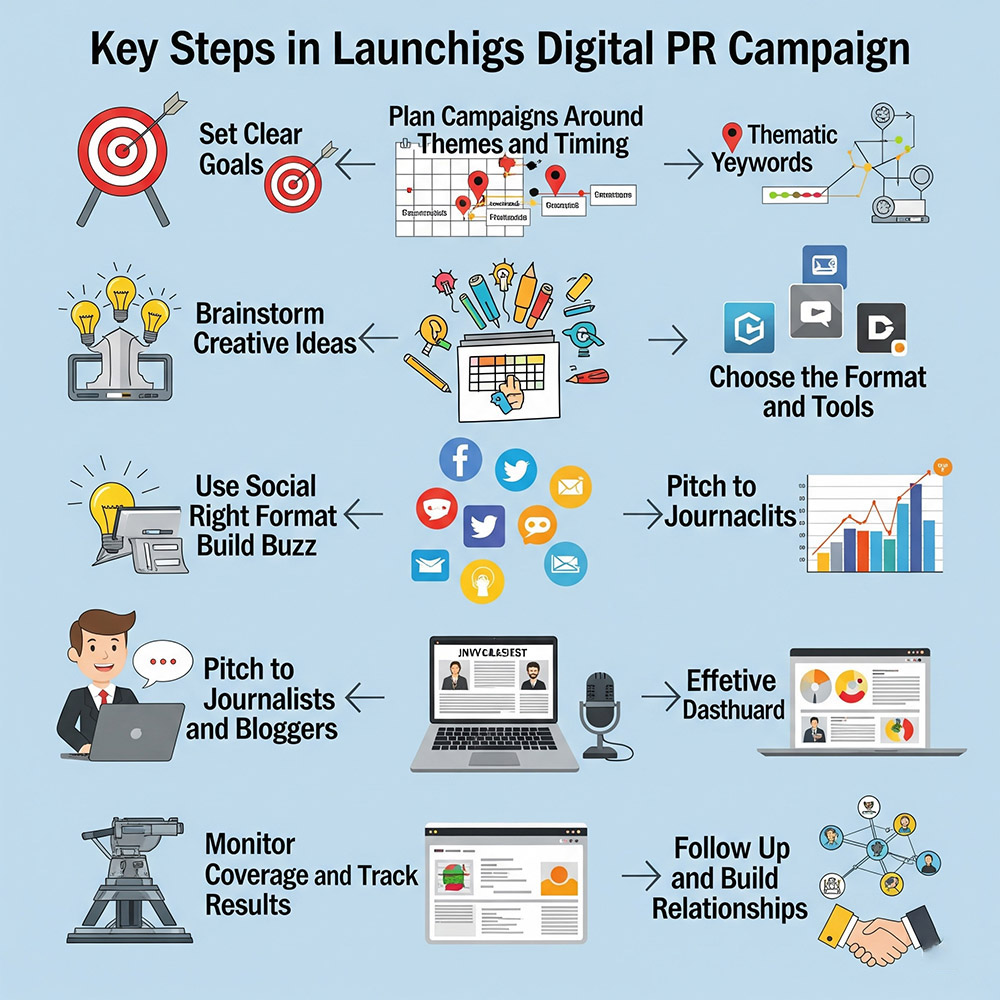
Step 1: Set Clear Goals
Before doing anything, decide what you want to achieve. Are you trying to get more website traffic, increase brand awareness, improve SEO rankings, or earn backlinks? Clear goals will guide every decision you make.
Tip: Make your goals measurable. For example, “earn 20 backlinks in 3 months” or “increase referral traffic by 15%.”
Step 2: Plan Campaigns Around Themes and Timing
Divide your goals into smaller campaigns. Use a content calendar to organize when each campaign will run. Think about events, holidays, or seasonal trends to align your campaign themes with what people are already talking about.
Tip: Coordinate with your social media team so your PR and online posts support each other.
Step 3: Brainstorm Creative Ideas
Get together with your team to come up with ideas that are newsworthy, interesting, or fun. Think of stories, surveys, or original data that could catch a journalist’s eye. Use tools like Google Trends or BuzzSumo to see what topics are trending.
Tip: Unique and emotional stories tend to perform well. Humor, surprise, or useful information work best.
Step 4: Choose the Right Format and Tools
Decide how to present your campaign: press release, infographic, blog post, video, or interactive content. Choose a format that suits your message and makes it easy for journalists to share.
Tip: Infographics and videos are especially powerful on social media and can be shared widely.
Step 5: Use Social Media to Build Buzz
Social media is a powerful engine for amplifying your digital PR efforts. Platforms like Facebook, LinkedIn, and Twitter (X) allow you to instantly share your campaigns and interact with audiences, creating a ripple effect that boosts visibility and engagement.
Start by publishing your press releases, infographics, or blog articles across your brand’s social media channels. Use eye-catching visuals and craft captions that hook attention quickly. Tag journalists, media outlets, and influencers who might be interested in your story. This not only increases reach but can also lead to organic media pickups if the right people see your post.
Schedule your posts strategically around peak times when your audience is most active, and repurpose content into multiple formats (e.g., Instagram Stories, LinkedIn articles, short tweets) to maximize engagement.
In addition, use hashtags relevant to your industry and campaign topic to join trending conversations. Engagement is key. Reply to comments, reshare user-generated content, and participate in relevant threads to build a community around your campaign.
Tip: Don’t just promote, but engage. Ask questions, respond to comments, and create conversations around your campaign.
Step 6: Pitch to Journalists and Bloggers
Send your story to the right journalists and blogs. Keep your email short and direct. Include a clear subject line, a few paragraphs of context, and links to your content. Avoid attachments; instead, paste content directly into the email.
Tip: Personalize your emails and only pitch to outlets that cover your topic area. Relevance matters more than size.
Step 7: Monitor Coverage and Track Results
Use tools like Google Alerts, Ahrefs, or Mention to see who covers your story and whether you earn backlinks. Check how much traffic comes from your campaign and measure changes in SEO or brand mentions.
Tip: Even if an article doesn’t include a link, it still builds visibility and credibility.
Step 8: Follow Up and Build Relationships
Thank the journalists who covered your story. Let them know you’re happy to work with them again. Over time, strong media relationships lead to more coverage with less effort.
Tip: Keep a contact list of reporters who responded well. Send occasional updates or useful stories, not just pitches.
Measure Your Digital PR Campaign Performance
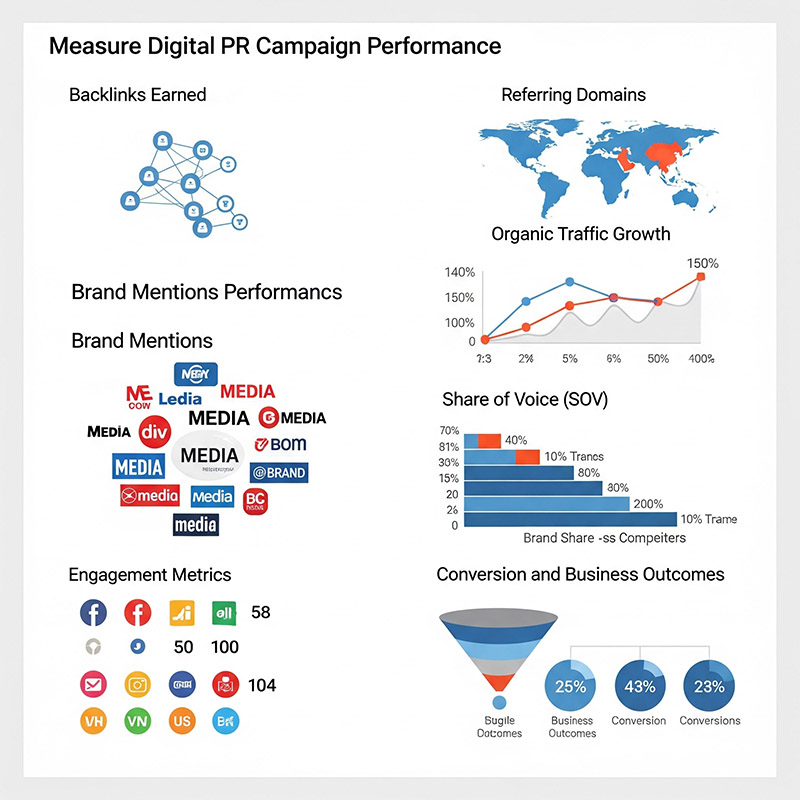
Backlinks Earned
One of the clearest indicators of a successful digital PR campaign is the number and quality of backlinks earned from authoritative media sites. High-quality backlinks from trusted sources boost your SEO performance and domain authority.
Tip: Use tools like Ahrefs or SEMrush to monitor new backlinks, their sources, and anchor text relevance.
Referring Domains
The number of unique domains linking back to your content is a powerful signal to search engines. More referring domains typically indicate broader media coverage and a more diversified backlink profile.
A wide range of referring domains builds a stronger, more resilient SEO foundation than many links from a single source.
Organic Traffic Growth
Effective digital PR improves your search rankings, which should lead to more organic traffic. Compare traffic data before and after a campaign to assess its real impact on visibility.
Google Analytics offers insight into referral and organic traffic sources and can help attribute visits to specific PR content.
Brand Mentions
Even without a direct link, brand mentions help with visibility and authority. Track how often and where your brand is discussed online using tools like Google Alerts.
Mentions in high-authority publications—even without links—can still influence user trust and search engine perception.
Share of Voice (SOV)
This measures how much of the online conversation your brand controls compared to competitors. It reflects your visibility in your niche and your ability to capture attention.
Track it with competitive analysis tools such as SEMrush or Mention.
Engagement Metrics
Look at metrics such as time on page, bounce rate, and scroll depth to evaluate how users interact with your content after landing on it via a PR link.
High engagement indicates that the traffic you’re attracting is relevant and interesting.
Conversion and Business Outcomes
The ultimate success of a campaign is often tied to conversions—signups, purchases, demo requests, or downloads. Track how your PR efforts influence actual business goals.
Use UTM parameters in your links to track specific user paths in Google Analytics and attribute conversions accurately.
Endnote – PR And Digital Marketing Should Go Hand In Hand
Public relations and digital marketing are no longer separate strategies, but they thrive together. While PR builds trust through media coverage, brand storytelling, and influencer relationships, digital marketing amplifies these efforts to reach broader audiences. Together, they humanize your brand, handle crisis communication, and strengthen audience engagement across platforms.