Marketing strategies and tactics are not interchangeable. They play complementary roles in achieving business success. If you still mistake these two terms, keep reading until the end to see how goals, strategies, and tactics align and how to put them into practice with real-world examples.
In This Article:
What Are Marketing Tactics?
Marketing tactics are the specific activities and actions that bring a company’s strategy to life. They provide the practical deliverables that address the objectives set by the strategy, focusing on execution and measurable outcomes.
Tactics often draw from the marketing mix (4 Ps):
- Adjusting Price to penetrate new markets
- Enhancing Product features or launching trials
- Expanding Place through e-commerce or new online channels
- Using Promotion methods like advertising campaigns
In essence, tactics represent the “doing” side of marketing.
What Are Marketing Strategies?
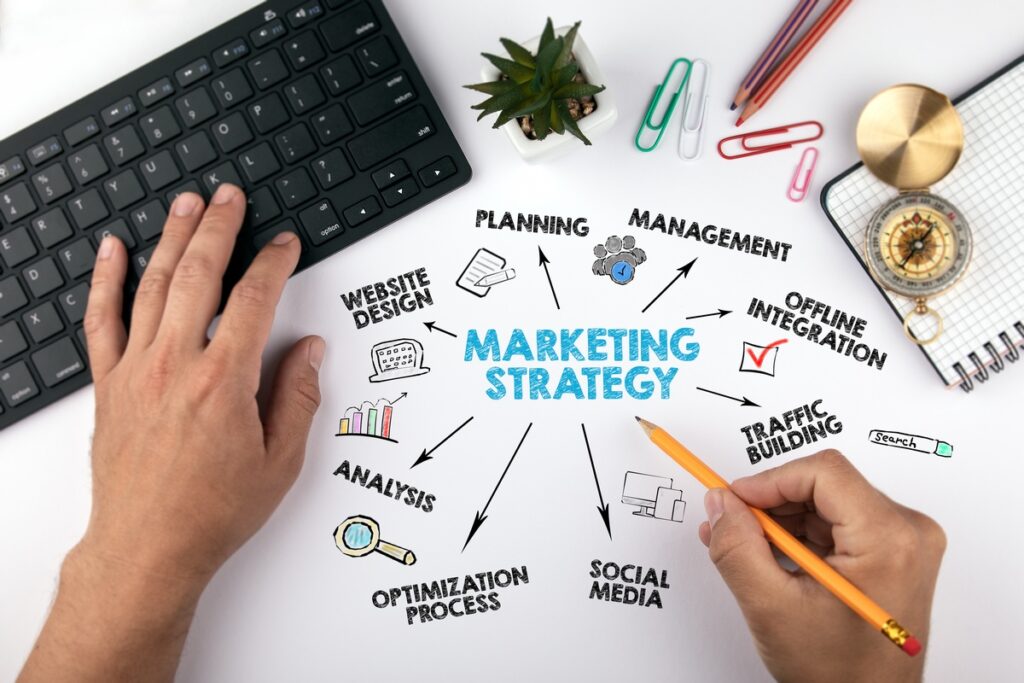
A marketing strategy is a high-level plan that outlines how a business will achieve its goals and vision. It is directly aligned with the overarching business strategy, making it a critical enabler of success.
A strategy typically includes clear marketing objectives linked to the business plan, a roadmap of activities (later executed as tactics), and supporting elements like budgets and resource planning.
The Difference Between Marketing Strategies And Tactics
Strategy: The Big Picture

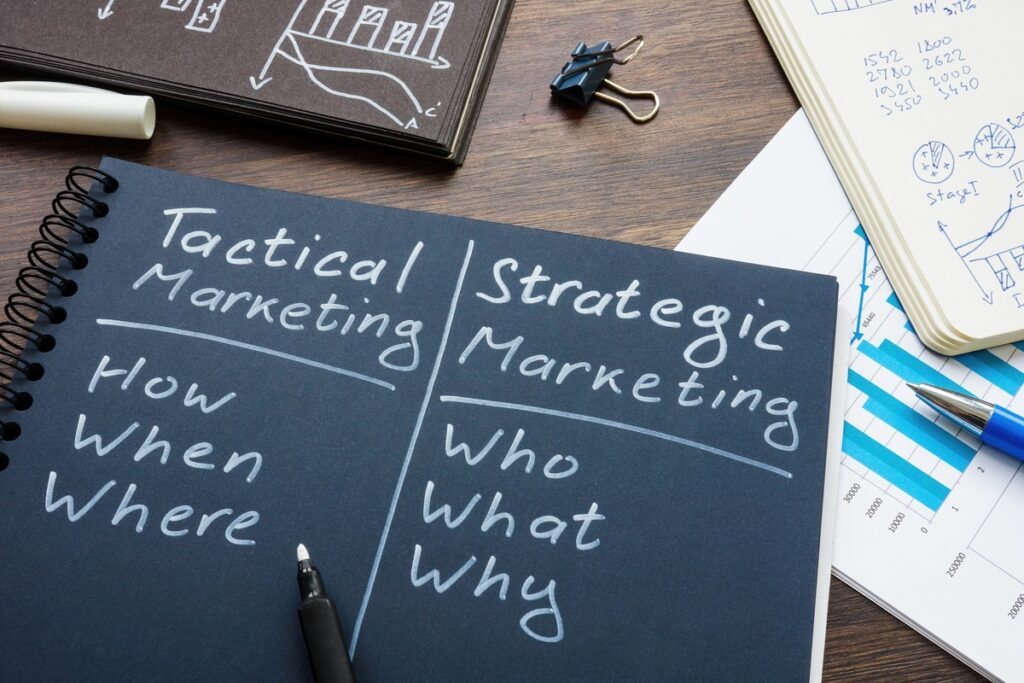
A marketing strategy defines the long-term vision for growth and market positioning. It identifies target audiences, unique value propositions, and brand messaging. Strategies answer fundamental questions such as “Who are we trying to reach?”, “Why should they choose us?”, and “What goals do we want to achieve?”.
For example, a strategy might be to position a company as the premium option in its market by emphasizing quality and trust. Without this framework, businesses risk pursuing scattered efforts that fail to deliver consistent results.
Tactics: The Execution Steps
Marketing tactics are the day-to-day actions used to bring a strategy to life. They are specific, measurable, and often short-term actions, such as launching Facebook ads/Google Ads, creating video tutorials, sending targeted email sequences, or optimizing blog posts for SEO (Search Engine Optimization).

Tactics represent the “how we do it” and “what we do next”. While they can generate immediate customer engagement, they may be ineffective if not guided by a strong strategic foundation. For instance, running ads without a clear audience strategy could waste budget on unqualified leads.
Why the Distinction Matters
Many businesses fail because they confuse tactics with strategy, chasing trends or copying competitors without knowing if those actions serve their bigger goals. Understanding the difference can:
- Prevent wasted resources: When tactics are executed without a guiding strategy, businesses often spend money and effort on activities that fail to generate meaningful results. Clear strategies ensure every dollar and hour invested supports long-term objectives.
- Ensure consistency in messaging: A strong strategy provides a unified voice and direction for all marketing communications. Without it, tactics may send mixed messages that confuse customers or weaken the brand identity.
- Align teams and stakeholders: Strategies create clarity across departments, helping sales, product, and marketing teams work toward the same objectives. This alignment prevents duplication of effort and ensures every tactic serves the bigger picture.
- Improve measurement and accountability: When strategy and tactics are distinguished, it becomes easier to measure success. Strategies define the goals, while tactics provide the metrics. Together, they allow businesses to track progress and adjust intelligently.
- Support long-term growth: Short-term tactics may generate quick wins, but only strategies build sustainable success. Distinguishing the two helps businesses balance immediate actions with a roadmap for scalability and resilience.
- Encourages smarter decision-making: With a strategy in place, leaders can evaluate whether a tactic truly supports business goals or is simply chasing a trend. This helps avoid reactive decisions and keeps marketing focused on impact.
The Connection Between Marketing Goals, Strategies, And Tactics
Marketing goals, strategies, and tactics are deeply interconnected, forming a structured hierarchy that guides business growth.
Goals define the destination. This is the outcome a company wants to achieve, such as better conversion rates, higher sales, improved retention, or stronger brand recognition.
Strategies are the broad approaches that map out how to reach those goals, aligning with market positioning, target audience, and competitive advantage.
Tactics are the concrete, measurable steps that bring the strategies to life, such as launching campaigns, writing blog posts, or running ads.
The connection lies in alignment: goals provide purpose, strategies give direction, and tactics drive execution. Without goals, strategies lack focus; without strategies, tactics become random and wasteful.
When all three work together, marketing efforts become cohesive, efficient, and results-oriented, turning big-picture ambitions into actionable success.
Examples Of Marketing Goals, Strategies, And Tactics
Below are some practical examples of how they work hand-in-hand:
Goal: Build brand awareness
- Strategy: Position the brand as a trusted thought leader in the industry.
- Tactics: Publish in-depth blog posts, host educational webinars, and collaborate with influencers to reach wider audiences.
Goal: Generate high-quality leads
- Strategy: Leverage inbound marketing to attract and nurture prospects.
- Tactics: Optimize website content for SEO and website visibility, create downloadable resources like eBooks, and run email nurture campaigns.
Goal: Increase customer retention
- Strategy: Enhance customer loyalty through relationship-building initiatives.
- Tactics: Send personalized retention emails, create loyalty programs, and offer referral bonuses.
Goal: Enter a new market
- Strategy: Differentiate the brand with a strong value proposition tailored to the new audience.
- Tactics: Launch geo-targeted ad campaigns, adjust website copy for cultural relevance, and develop localized social media content.
FAQs
Can I Implement A Marketing Tactic Without A Strategy?
Yes, it’s possible to implement a marketing tactic without a strategy, but it’s rarely effective. Tactics such as running ads, posting on social media, or sending email campaigns may generate some results in the short term.
However, without a strategy to align them with business goals, these actions risk being inconsistent, costly, or misdirected. Tactics without strategy often lead to wasted resources and scattered efforts that don’t support long-term growth.
Which Comes First, Marketing Strategy Or Tactics?
Marketing strategy always comes first. A strategy defines the goals, target audience, positioning, and direction that guide every marketing effort. Once the strategy is in place, tactics are selected and executed to achieve those objectives.
Strategy sets the “why” and “how,” while tactics deliver the “what” and “when.” In short, strategy is the foundation, and tactics are the building blocks that make the plan actionable.