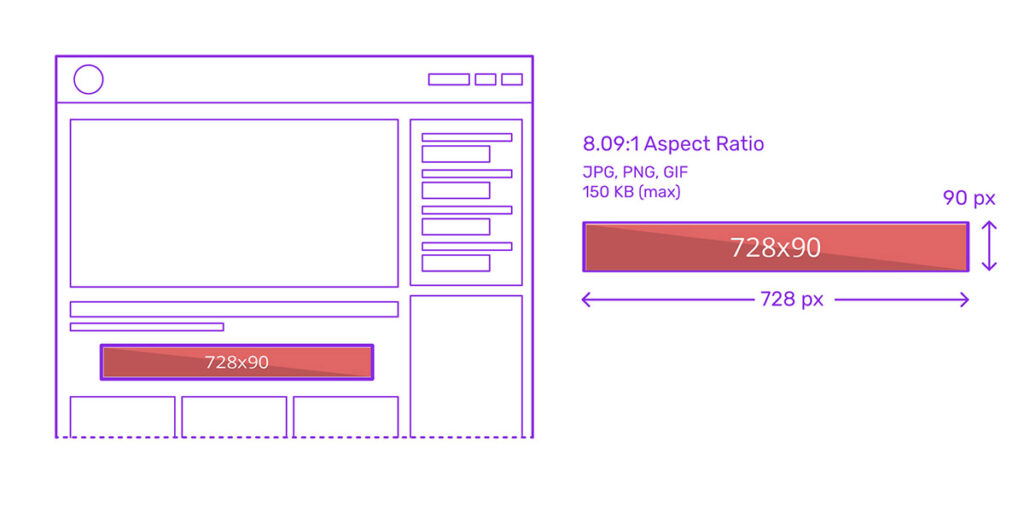
If you’re looking for a high-performing display ad that gets seen and clicked, the leaderboard ad size is a smart choice. Its size and placement make it ideal for catching users’ attention at the top of a webpage. In this article, we’ll show you what it is, what its dimensions are, where it works best, and how to use it right.
In This Article:
What Is A 728×90 Ad? The Leaderboard Banner
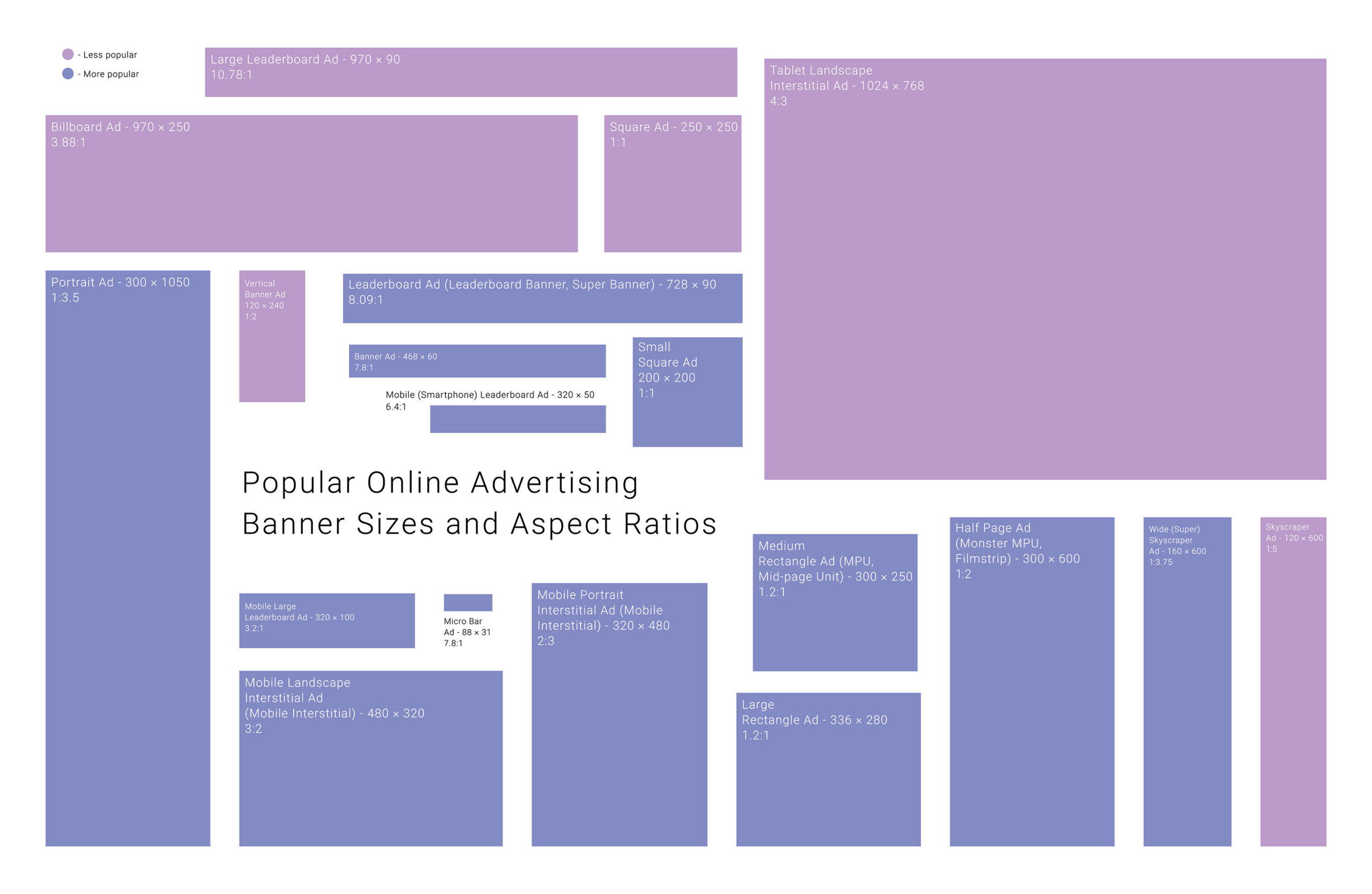
The 728×90 leaderboard ad is a horizontal display advertising unit that measures 728 pixels wide by 90 pixels tall. Known for its high visibility and prime placement, usually at the top of a webpage, this format is one of the most widely adopted in online advertising. It is often the first ad users see when a page loads, making it ideal for capturing attention quickly and driving engagement.

Leaderboard banners are favored by advertisers for their ability to seamlessly fit within web layouts without disrupting the user experience. Their standard dimensions also make them easy to integrate across most websites and ad platforms.
Versatile in design, these banners can accommodate static images, animations, HTML5 creatives, or even expandable formats. Despite their relatively modest size, leaderboard ads consistently deliver strong performance, especially when placed above the fold, where user visibility is highest.
Benefits Of Leaderboard Web Banners
Leaderboard web banners (728×90) benefit marketers in many ways:
High Visibility And Prime Placement
Placed at the top of web pages, leaderboard ads are among the first elements users see upon loading a site. This above-the-fold positioning ensures maximum exposure, increasing the likelihood of impressions and user engagement.
Strong Click-Through Rates
Due to their prominent placement and visual size, these ad formats often outperform other formats in terms of CTR. Their unobtrusive yet noticeable nature makes them more likely to be clicked, especially with a responsive design and compelling message.

Visual Impact Without Intrusion
Leaderboard ads strike a balance between visibility and user experience. Unlike pop-ups or interstitials, they do not disrupt navigation or content consumption, offering non-intrusive engagement that users are more tolerant of.
Ease Of Implementation
With standardized dimensions (728×90), leaderboard banners are easy to create and deploy. Most ad servers and platforms support them, enabling quick setup and seamless integration into websites and apps.
Mobile Adaptability
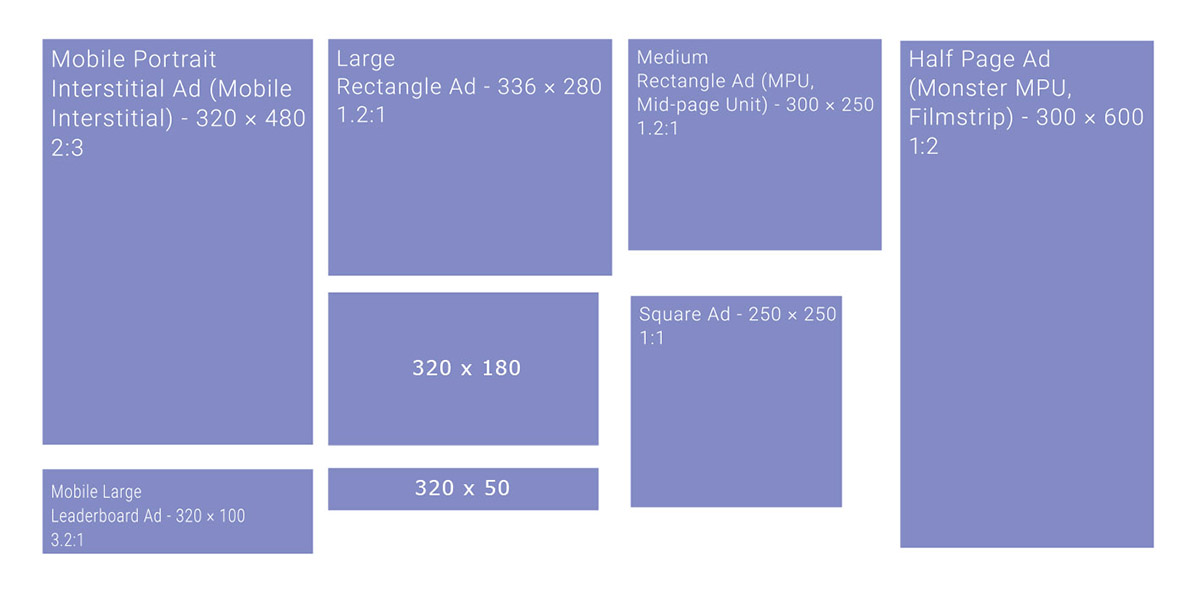
While originally designed for desktops, leaderboard ads can be adapted for mobile screens, typically replaced with 320×50 or 320×100 units. This ensures consistent user experience across devices.
Ideal For Multiple Campaign Objectives
Leaderboard banners support various goals:
- Brand awareness: Boost visibility at scale with consistent exposure.
- Lead generation: Drive traffic and conversions with targeted CTAs.
- Affiliate marketing: Achieve high click volumes for commission-driven strategies.
- Retargeting: Re-engage visitors with relevant offers based on past behavior.
Expandable And Multi-Format Friendly
These banners can be enhanced with expandable formats, video snippets, or HTML5 interactions, making them adaptable to advanced campaign strategies.
Proven Revenue Potential
Publishers often report high RPM (revenue per thousand impressions) from leaderboard placements, especially when used on high-traffic pages like homepages or category hubs.
Better Branding Opportunities
Their positioning near site logos or headers offers an implicit association with trusted publishers, enhancing brand recall and message credibility.
Top 728×90 Placeholders For The Best Performance

To maximize the effectiveness of 728×90 leaderboard ad formats, strategic placement is critical. The following ad placements consistently deliver the highest visibility, engagement, and return on investment:
Top Of The Page (Above The Header)
This is the most effective and visible placement. Positioned above the website’s header or logo, the ad is the first element users see, making it ideal for brand exposure and high click-through rates. This spot ensures the ad is always above the fold, a highly sought-after location in online advertising.
Below The Header
Still within the above-the-fold zone, this placement situates the ad just under the navigation menu. It benefits from strong visibility while integrating more naturally with the site’s interactive content. This is a common strategy on news, tech, and publishing platforms.
Within Or Between Content
Embedded between paragraphs or sections of an article, this placement can offer high in-context visibility, particularly if the content is engaging and long-form. While visibility depends on scroll depth, it provides a less expensive and still effective option for advertisers.
Above The Footer
This placement appears at the bottom of the webpage, just before the footer. It tends to have lower performance due to reduced visibility (many users don’t scroll this far), but it can still be valuable for remarketing or retargeting campaigns where cost efficiency is key.
As An Anchor Ad (Sticky Footer On Desktop)
Used as a persistent footer ad that follows the user while scrolling, this placement ensures constant visibility. While potentially effective in terms of impressions, it can be perceived as intrusive and may negatively affect user experience if not implemented carefully.
Best Practices To Use 728×90 Banner Ads

Here are the most effective practices and critical pitfalls to avoid when using leaderboard banners:
Do’s
- Prioritize above-the-fold placement: Place leaderboard display banners at the top of the page, ideally above or just below the header. This ensures they are seen immediately upon page load, maximizing visibility and click-through rates.
- Use clear, concise messaging: Communicate your core values in a single, strong line. Avoid long text blocks. A concise, benefit-driven ad message with a clear value proposition outperforms generic or overly wordy ads.
- Focus on clean and impactful ad design: Keep visuals clutter-free and use high-quality images and minimalist color schemes. Also, the ad should be tailored to your target audience, both visually and contextually.
- Design with mobile adaptability in mind: Even though 728×90 is a desktop format, it should degrade gracefully on smaller screens. Consider replacing it with 320×50 or 320×100 on mobile for consistency.
- A/B test creatives: Continuously test variations of headlines, CTAs, color schemes, and placements. Let data guide design choices for optimal CTR and conversion rates.
- Use strong call-to-action buttons (CTAs): Include action-driven CTAs like “Learn More,” “Sign Up,” or “Shop Now.” Make the CTA visually prominent and clearly distinguishable from the background.
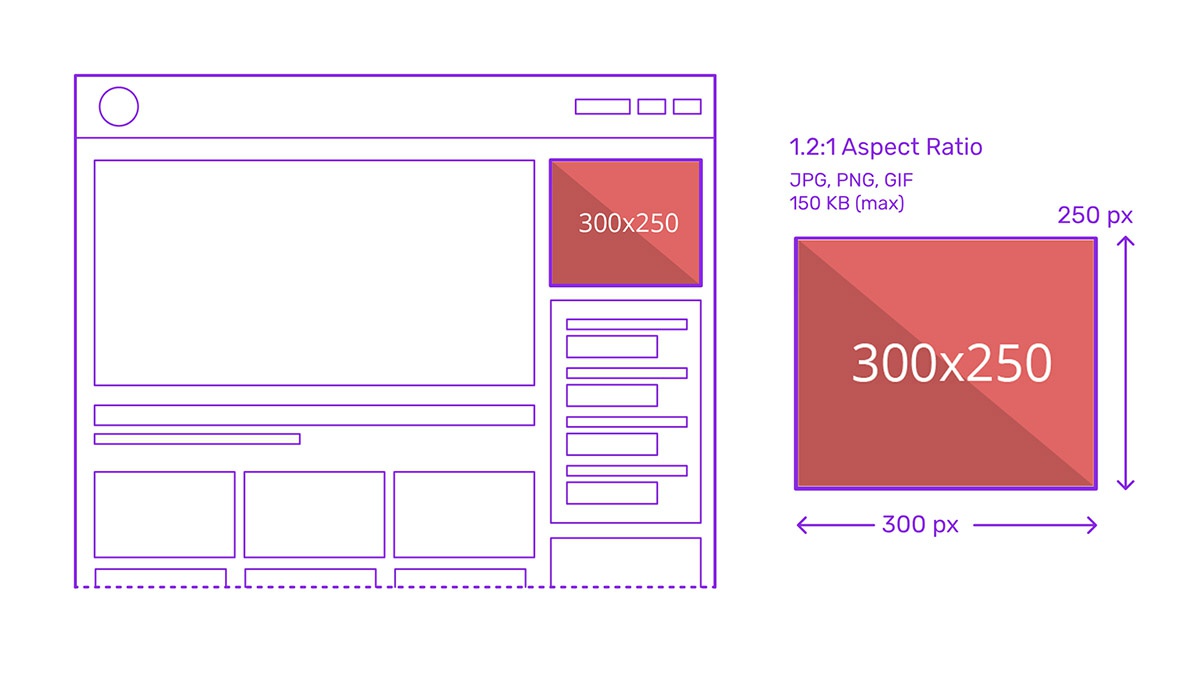
- Align leaderboards with other ad units: Pairing 728×90 banner ads with complementary units like 300×250 MPUs can increase overall effectiveness and provide consistent user experience across the site.
- Track and label placements individually: Label each ad position (e.g., “Top728,” “Footer728”) in your ad platform. This enables performance segmentation and better reporting for sales and optimization.
Don’ts
- Placing below the fold without lazy loading: Leaderboard ads near the footer suffer from low visibility. If used, implement lazy loading to avoid slowing page speed and to trigger loading only when in view.
- Overusing multiple leaderboards on one page: Avoid placing too many leaderboard units. It dilutes value and may reduce performance. Focus on one high-impact placement, usually at the top.
- Embedding in iFrames: Expandable or interactive leaderboards should not be placed in iframes, as this limits functionality (like animation or tracking) and can hinder performance.
- Neglecting to test for load speed: Slow-loading display banners frustrate users and hurt SEO. Use CDNs, optimized image formats, and compress creatives to maintain site performance.
728×90 Ad Examples
Apple
Apple employs leaderboard banner formats on technology and lifestyle websites to spotlight product launches like the latest iPhones, iPads, or MacBooks. Their creatives typically feature sleek, minimalist visuals, bold product imagery, and direct links to the Apple Store, combining aesthetics with strong conversion intent.
Nike
Nike utilizes 728×90 leaderboard ads on sports and lifestyle websites to promote new product launches, special promotions, and events like the Nike Run Club. These ads often feature high-impact visuals of athletic gear and are combined with action-driven call-to-action buttons designed to resonate with active audiences.
Coca-Cola
Coca-Cola places leaderboard banners across major news and entertainment platforms to amplify seasonal campaigns or limited-time offers. Their ads frequently incorporate bright, eye-catching imagery and emotionally driven messages, helping to maintain brand presence and consumer engagement.
See more common Ad banner sizes: